
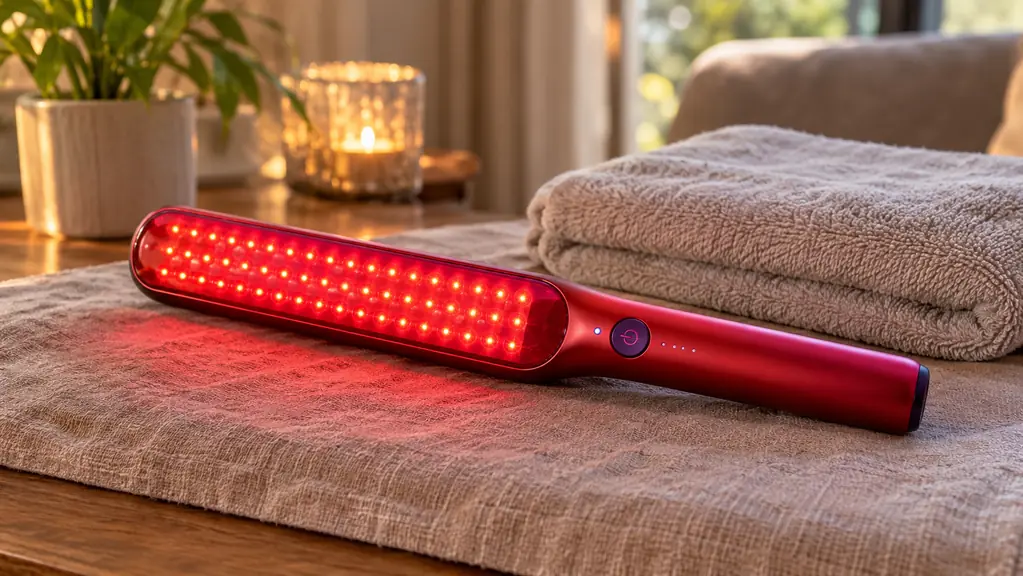
If you have been eyeing a handheld red light wand but putting it off because you are not sure how to actually use one, I understand. I am Carla Benton, and I felt the same way about two years ago. I spent thirty years standing at a dental chair, and my knees and shoulders remind me of it most evenings. A friend kept talking about her red light sessions, and I kept thinking, that sounds nice, but what do I do with it? Where do I point it? How long do I hold it? Does it go on bare skin? The Lifepro Lumicure wand is the device I finally settled on, and after using it for months, I can walk you through the whole routine the way I wish someone had walked me through it.
This guide is not a medical lecture. I am not a doctor, and I will not pretend otherwise. What I can give you is a plain-spoken walkthrough: how I use the Lifepro Lumicure at home, what to check before you buy, and the small habits that made the difference between the wand sitting in a drawer and the wand actually earning its spot in my evening routine.
Start your first session tonight with the Lifepro Lumicure wand
One button, three wavelengths, and a wrist strap so you can keep it steady while you watch a show. Check today's price on Amazon and see if it fits your routine.
Amazon Check Today's Price on Amazon →Step 1: Unbox it and read the manual before you charge anything
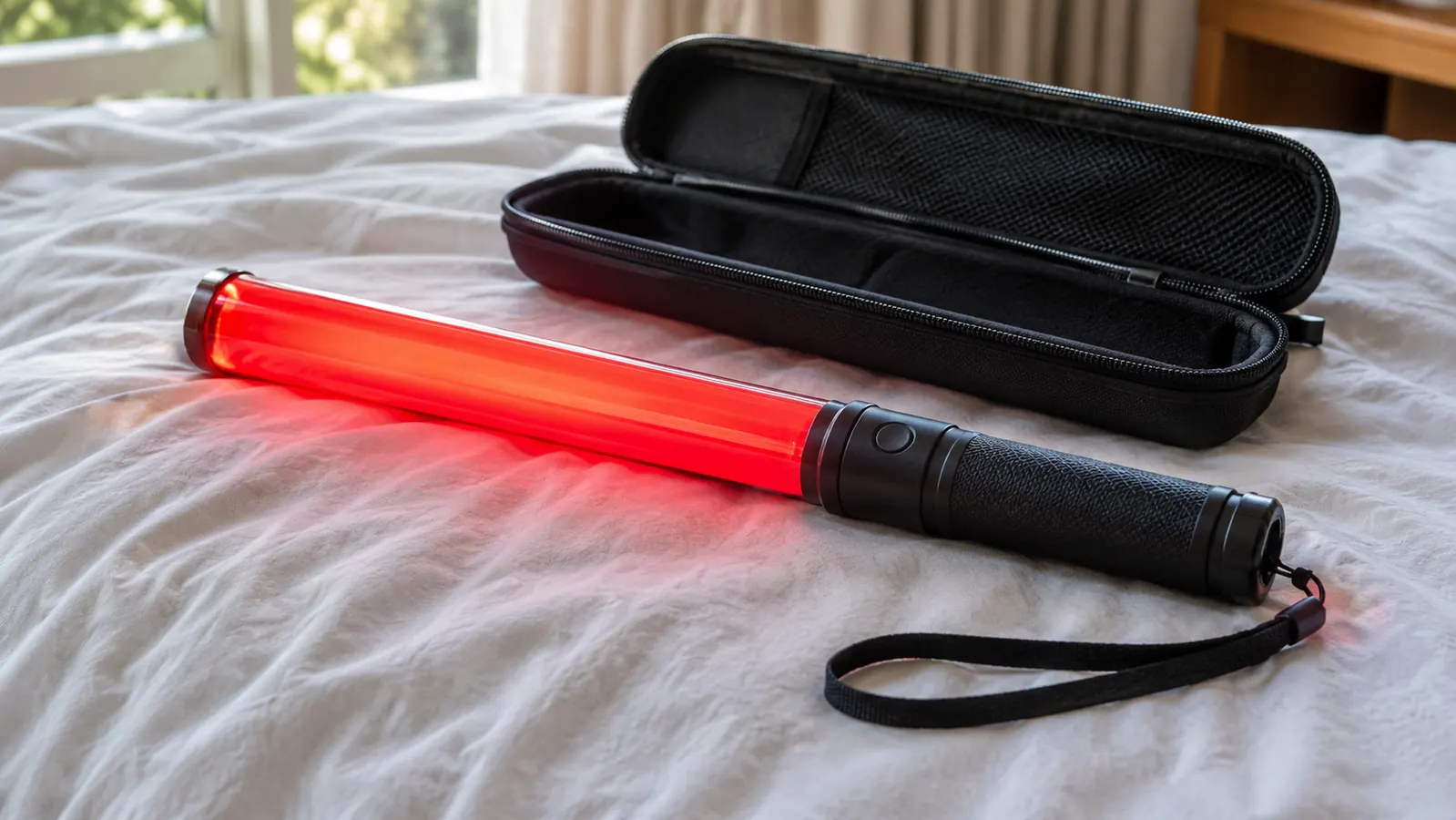
The Lifepro Lumicure arrives with the wand, a wrist strap, a zippered case, and a user manual. The first thing I did was read the manual cover to cover, and I will tell you why: the manual is the only place that tells you how long the manufacturer suggests using it per area. I know it is tempting to skip it, but the manual answered questions I did not even know I had, like how to care for the surface and what to avoid.
The wand is lightweight, about 6.35 ounces, with dimensions of 9.06 x 5.91 x 1.97 inches. It is a manual device, which means there are no complicated programs to learn. You simply touch the button to turn it on. That was the whole learning curve for me, and I will take that over a device with twenty settings any day.
The first time I opened the box was a Tuesday evening after a long day of errands. I laid everything out on the bed: the wand, the strap, the case, and the manual. I read the manual while the kettle boiled, and by the time my tea was ready I knew exactly what to do. That sounds small, but it saved me from the usual fumbling I do with new gadgets. I also checked the wand over for any damage, because I would rather know on day one than find out later.

Step 2: Find a comfortable spot where you can sit still for ten minutes
You do not need a dedicated room or any special setup. I use a corner of the spare bedroom most nights, and sometimes I sit on the living room couch while Ray and I watch a movie. The wand is handheld, so the only real requirement is that you can sit comfortably and hold it steady for a few minutes at a time.
Lighting matters more than you might think. I like to use it in soft, warm light rather than harsh overhead light. It is easier to see what you are doing, and it feels more like a calm evening ritual than a treatment. I also put my phone in the other room, because if I am honest, the session goes better when I am not checking the time every thirty seconds.
The first few nights I tried to use it in the kitchen under the bright ceiling light, and it felt like a chore. On the third night I moved to the spare bedroom, turned on the small lamp on the dresser, and everything changed. I set a timer on my phone, then put the phone in the other room so I would not keep checking it. Ray asked what I was doing the first time he saw me, and now he just hands me the remote and lets me be.
The battery is rated for about 6 hours of use, so a full charge lasts a good long while. I charge mine when I notice the light getting dimmer, and I have never had it die mid-session. Still, I make a habit of checking the button before I start, because there is nothing more annoying than settling in and realizing you forgot to charge it.
Step 3: Hold the wand against clean, dry skin and move slowly
This is the part I was most unsure about, so let me be very specific. I hold the wand directly against my skin, or just barely above it, and I move it in slow, small circles. I do not press hard. The goal is not pressure, it is light. I let the wand rest on my knee and glide it along the area I am working on, then move to the next spot.
For my knees, I sit on the edge of the bed, bend the knee slightly, and run the wand over the front and sides of the joint. For my shoulders, I hold it with the hand on the opposite side so I can reach comfortably. It takes a little practice to find the angle that works, but the wand is light enough that my hand does not get tired.
The first time I used it on my knee, I held it in one spot for a full minute and the warmth surprised me. I learned to keep moving instead. Now I count to ten in one spot, then shift the wand by about the width of two fingers. For my shoulder, I had to angle the wand differently, so I sat sideways on the edge of the bed and braced my elbow on my thigh. It took me two or three sessions to find that position, and now it is automatic.
The Lifepro Lumicure combines three wavelengths of red and near-infrared light. I am not going to pretend I can feel the wavelengths separately, but I can tell you what I notice: a gentle warmth on the skin, and a relaxed feeling in the area I am treating. The manual says it is designed to support muscles and joints, and I use it that way, for my knees, my shoulders, and the parts of my back that complain after a long day.
Step 4: Keep sessions short and consistent
The biggest mistake I made at the beginning was thinking more was better. I would hold the wand in one spot for what felt like forever, and I would skip days because I felt like I needed a full hour to make it worthwhile. Neither of those habits helped. What helped was consistency: a short session most evenings, even if it was only five or ten minutes on one area.
I usually split my time between two areas. One evening I will do my knees, and the next evening I will do my shoulders and the back of my neck. Some nights I just sit on the couch with the wand on my knee while a movie plays, and that counts as my session. It does not need to be a production.
For the first two weeks I kept a tally on a scrap of paper on the nightstand. Every evening I finished a session, I made a small X next to the date. Seeing three X's in a row made me want to keep the streak going, and that little bit of accountability carried me through the nights when I was tired and would rather have skipped it. After a month, the tally felt unnecessary, because the routine had already become the default.
The manual is your best guide for how long to use it per area. When I am in doubt, I err on the side of shorter. You can always do another session tomorrow, and you will, because it is easy enough to keep up with.
Step 5: Clean it, store it, and make it a habit
When I finish a session, I wipe the wand with a dry cloth and put it back in the zippered case. The case is one of those details I did not think I would care about, but I do. It keeps the wand from gathering dust, and it makes the whole thing feel tidy. The wrist strap goes around my wrist during use so I never drop it, and then it stays attached to the wand in the case.
I keep the case on the nightstand in the spare bedroom. That is the real trick to forming the habit: leave the wand where you will see it. When it is tucked away in a drawer, I forget about it. When it is sitting out, I pick it up after I brush my teeth, do a quick session, and put it back. That is the whole routine.
One thing I learned the hard way is to close the case all the way. The first time I left it half open on the nightstand, the wand gathered a fine layer of dust and I had to wipe it carefully before I felt good about putting it on my skin. Now I zip it up every single time. Once a week I give the wand a wipe with a dry microfiber cloth, and I check the button and the strap while I am at it.
After a few weeks, the routine stops feeling like a routine and starts feeling like the part of the evening where I sit down, breathe, and let the day go. That alone is worth something.
What Else Helps
A few things made the wand easier to stick with. I use it after a shower, when my skin is clean and I am already relaxed. I keep a towel nearby so I do not drip on the wand, since it is not water resistant. I tell Ray what I am doing so he does not walk in and ask if I am okay, which happened exactly once. And I pair the session with something I already do, like watching a show or listening to a podcast, so it does not feel like an extra chore.
I also learned to do my session before bed rather than right before I needed to run out the door. The calm part is half the benefit, and rushing through it on the way to an appointment just made me feel behind. On nights when Ray and I are watching a movie, I do my session during the opening credits and I am usually done before the first scene ends. That timing turned out to be the easiest of all, because the wand is already in my hand and the movie keeps me still.
I also check in with my doctor about anything that hurts, because a wand is not a substitute for medical care. Red light therapy is something I enjoy and find relaxing, and I think it helps me feel better, but I would never tell anyone to skip a doctor's visit because they bought a device. Use it as a complement, not a replacement.
The biggest mistake I made was thinking more was better. What helped was consistency: a short session most evenings, even if it was only five or ten minutes on one area.
The Lifepro Lumicure is the wand I reach for every evening
Lightweight, simple to use, and easy to store in its zippered case. If you want a no-fuss way to add red light to your routine, check today's price on Amazon.
Amazon Check Today's Price on Amazon →