
I was about six months into at-home red light therapy when I started eyeing the Shark CryoGlow. My INIA mask had settled into my evenings the way a cup of tea does, and I was curious whether the cooling feature Shark kept talking about was worth the switch. The short answer, after three weeks of going back and forth between the two masks, is that for most people it is not. The INIA does the job for a good deal less money, and the Shark's cold plate, pleasant as it is, never changed the outcome for me. It changed how the session felt. That is worth something. It is just not worth everything.
Here is the plain version. Both are hands-free LED face masks you wear over your face while you sit back and do nothing else. Both are comfortable enough to wear through a whole movie. The INIA gives you four light modes, red and blue, with 220 high-energy LED chips and a battery that comes in the box, so nothing tethers you to a wall. The Shark adds a cooling plate and sells for a good deal more. If cooling is the specific feature you want, the Shark is the only one of these two that has it. If you just want a solid red light mask you will actually use, the INIA is the one I reach for.
| INIA Red Light Therapy Mask | Shark CryoGlow | |
|---|---|---|
| Light modes | 4 modes with red and blue light you switch between | Fewer modes, built around red light plus cooling |
| Wavelengths | 630nm red plus 850nm near-infrared for a dual-wavelength session | Red light with cold therapy as the headline feature |
| LED count | 220 high-energy LED chips | Shark does not publish a comparable chip count |
| Cooling | No cooling feature | A cooling plate that chills your skin as it treats |
| Portability | Battery included, so it moves from the couch to the spare room | A bigger setup with its own controller, best at a table |
| Price | The budget-friendly pick | Sells for a good deal more |
| Best for | Movie nights and easy multitasking | Dedicated cooling sessions |
Where INIA Wins
The INIA wins on value, and for me that is the whole ballgame. It is a dual-wavelength mask, 630nm red light for the surface and 850nm near-infrared that reaches deeper, with 220 LED chips spread across the face piece. The four modes mean I can run a red light session most nights and switch to blue when my skin feels like it needs it. None of that requires any thought. I put the mask on, settle back, and let it run while Ray picks the movie. A tool that asks nothing of me is a tool I will keep using, and consistency is the only thing that has ever mattered in my two years of red light therapy.
Then there is the battery. The INIA runs on a single lithium ion battery that comes in the box, so I can wear it on the living room couch or take it to the corner of the spare bedroom where I keep my other gear. The whole package comes in at 1.81 pounds, which sounds like a lot until it is on your face, and the box is 12.68 by 9.09 by 1.93 inches, small enough to tuck into a drawer between sessions. I have never once wished it plugged into a wall. I have never once wished I had spent more. That is the whole review in two sentences.
Where Shark CryoGlow Wins
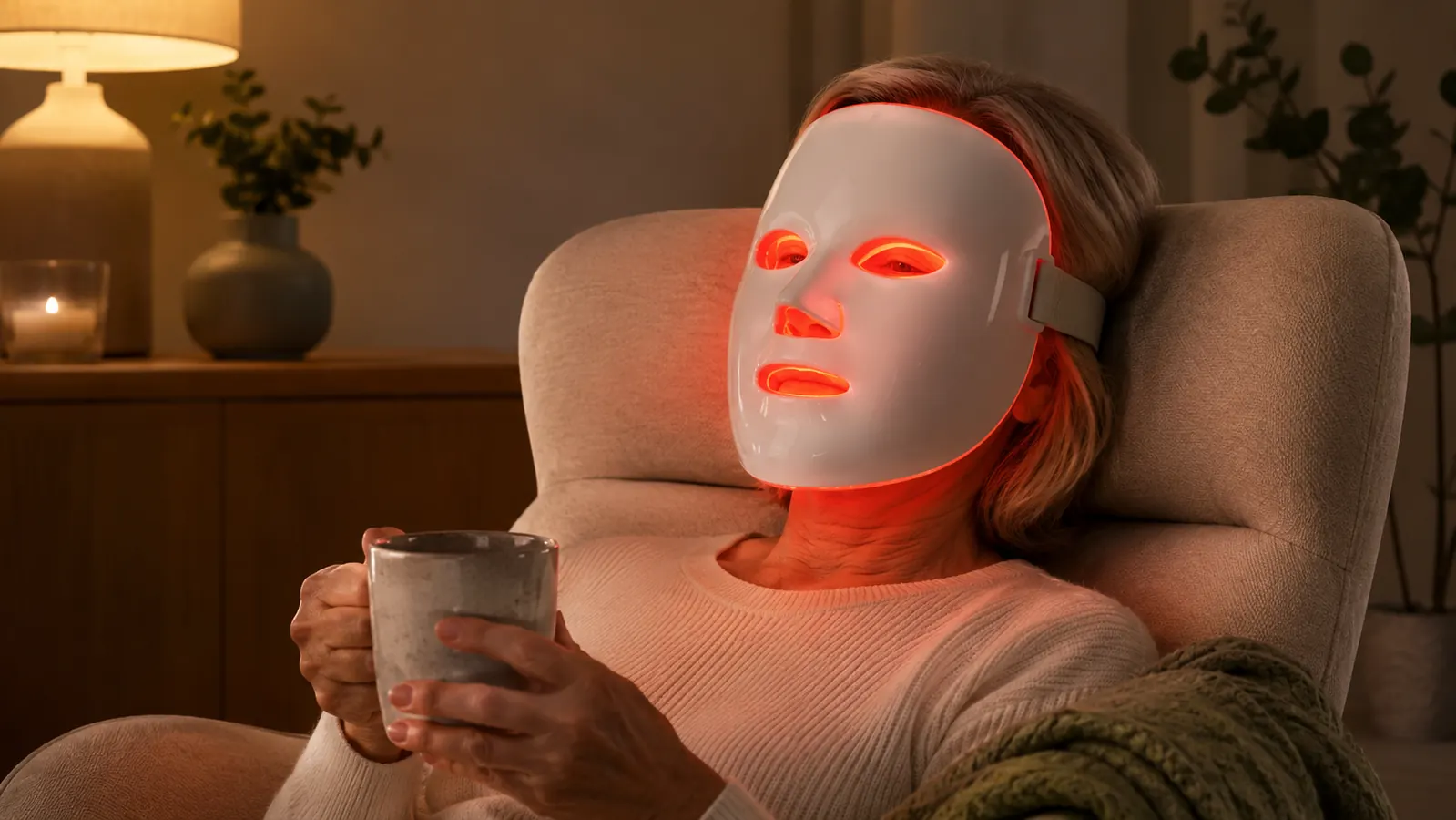
The Shark wins on cooling, and I will not pretend otherwise. The CryoGlow's idea is that the mask chills your skin while the red light works, and it does exactly that. On a warm Savannah evening after a day in the garden, that cold plate feels genuinely good. It is the kind of feature you notice immediately and keep noticing, because it turns a passive session into something that feels like a spa appointment. If you love a cold cloth on your face at the end of a long day, you will love the Shark.
The Shark also feels more finished as a product. The controller is its own piece, the fit feels carefully engineered, and the whole thing carries the polish you expect from a brand that makes vacuums and hair tools. If you like a device to feel like an event, the Shark delivers that. My honest note is that the cooling did not change my skin in the three weeks I gave it. It changed how the session felt. That is worth something, and it is worth exactly what you decide it is worth. I decided it was not worth the difference in price.
The mask I reach for most nights
If you want four light modes, red and blue, with 220 LED chips and a battery that lets you use it anywhere, the INIA does all of it for a good deal less than the Shark. It is the mask I keep on the couch.
Amazon Check Today's Price on Amazon →How I Used Both
I used each mask for three weeks, alternating nights, same routine. Clean face, no serums that would interfere, ten to fifteen minutes a session, most evenings after dinner. With the INIA I usually sat on the couch with a movie on. With the Shark I found myself at the little table in the spare bedroom more often, because the controller and the cooling made it feel like a sit-down appointment rather than a passive thing. Neither routine is right or wrong. They are just different, and the difference tells you which mask fits which life.
One thing I learned early: consistency beats everything. The mask that works is the mask you actually put on. That is why the INIA won my routine. It lives in the living room, it is ready when I am, and the battery means I never think about where to plug it in. The Shark needed a little more intention. That is not a flaw, it is a personality difference, but personality matters when you are trying to build a habit at fifty-eight.
Both masks are quiet. Both are easy to wipe down. And neither ever left a mark on my face, which surprised me, because my skin is sun-worn and sensitive after decades in Georgia. I had zero irritation from either one. If anything, the red light has been the gentlest thing I have added to my routine in years. That is the part I wish more reviews led with, because it is the part that decides whether a mask becomes a habit or a drawer ornament.
One more observation from the three weeks: the INIA got more compliments from Ray than I expected, which tells you it does not look ridiculous on. He noticed it the way he notices a new haircut, which is to say he noticed at all. The Shark got the same reaction. Both masks pass the 'would I wear this in front of my husband' test, and that matters more than the marketing photos suggest.
What to Check Before You Buy
Before you buy either mask, check three things. First, your skin. If you are prone to melasma, or you take any medication that makes your skin sensitive to light, ask your doctor before you start. I am a retired dental hygienist, not a dermatologist, and I give everyone the same advice: a five minute call with your doctor is cheaper than a regret. I am not here to sell you on a medical treatment. I am here to tell you what I noticed.
Second, the fit. LED masks are not one-size-fits-all. The INIA package is 12.68 by 9.09 by 1.93 inches, which gives you a rough sense of the footprint, and the mask fits my face well. If your face is on the narrower side, it may feel roomy. Read the dimensions, measure your own face, and buy from somewhere with a return policy you trust. Third, the routine. If you will not wear a mask for ten minutes a night, no wavelength on earth will save you. Start with the cheaper mask, build the habit, and upgrade later if you still want to. That advice has never once steered anyone wrong.
One more thing, and I mean it kindly. No mask fixes a bad routine. I have been doing this for two years, and the nights I see the most difference are the nights I have slept well, drunk enough water, and stayed out of the sun. The mask is a companion to all of that, not a replacement. Keep that in mind and you will be happy with either of these. Ignore it and you will be disappointed by both.
What I Wish I'd Known
First, results are slow, and that is normal. I did not see anything in the first two weeks. Somewhere around week six I realized my skin looked calmer in the morning, less blotchy after a day outside. I keep my expectations modest and my routine consistent, and that combination has served me better than any expensive feature. The mask is the last ten percent, not the whole answer. Sunscreen, moisturizer, water, sleep, all of it matters more than the device.
Second, the mask is only as good as the night you remember to use it. The INIA is a good last ten percent. It is easy, it is comfortable, and it fits into my life without a fuss. The Shark is a nicer last ten percent, but it costs a good deal more for the same ten percent. When I put it that way, the decision made itself. I keep the INIA on the couch. I admired the Shark, and then I put it back.
How the Sessions Actually Differ
If you are trying to decide between these two, the real question is what you want a session to feel like. The INIA session is the definition of low effort. I put it on, the LEDs do their work, and I could fall asleep if I were not enjoying the movie. The Shark session is more of a treatment. The cooling keeps you aware of the mask, which sounds like a small thing, but it changes the whole character of the ten minutes. Some people will love that. I liked it, and then I liked coming home to the easy one.
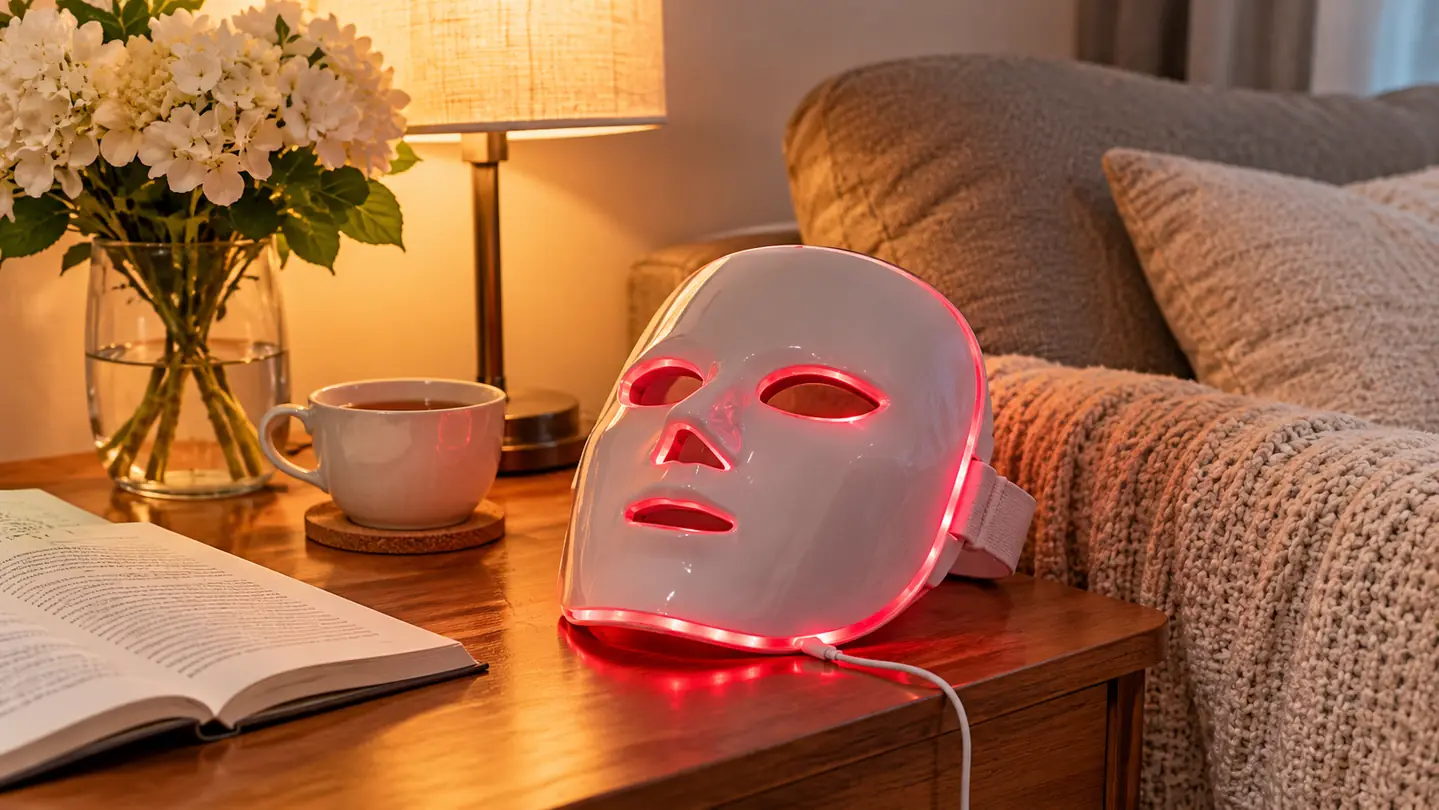
There is also the matter of where each mask lives. Mine live in different rooms now, which tells you everything. The INIA sits on the end table by the couch, ready for movie night. The Shark sits in the spare bedroom with the rest of my gear, and I have to decide to go get it. That extra step is the whole difference between a habit and a chore. If you are honest with yourself about how much friction you will tolerate, you already know which mask you should buy.
Who Should Buy Which
Buy the INIA if you want a straightforward red and blue light mask with four modes, a battery that comes in the box, and a price that does not make you wince. Buy the Shark CryoGlow if the cooling is the whole point, if you want the most polished, spa-like experience you can get, and if the extra money will not bother you. For me, at the end of three weeks, the answer was easy. The INIA is the mask I reach for. The Shark is the one I admired and then put back.
The one I would buy again
Four modes, dual wavelengths, a battery that lets you use it anywhere, and a price that leaves room in the budget. That is the mask I keep on the couch, and the one I would buy again tomorrow.
Amazon Check Today's Price on Amazon →