Red light therapy comes in more shapes than I expected when I first started looking, and that's saying something for a woman who spent thirty years telling patients to floss. The two designs that kept showing up in my searches were the bonodave pad, a flexible fabric pad with an elastic strap that you can wrap around just about any body part, and the red light belt, a wide band that buckles around your waist. If you've been shopping for red light at all, you've probably seen both and wondered whether the belt is enough or the pad is overkill. I wondered the same thing, so I spent time with both. The short answer: neither is better across the board. They're built for different routines, different goals, and different attention spans. Here's how I'd choose between them, and what I'd check before I bought either one. I'll get to the comparison table in a moment, but the short version is that one of these is a tool you aim at whatever hurts, and the other is a tool that stays where you buckle it.
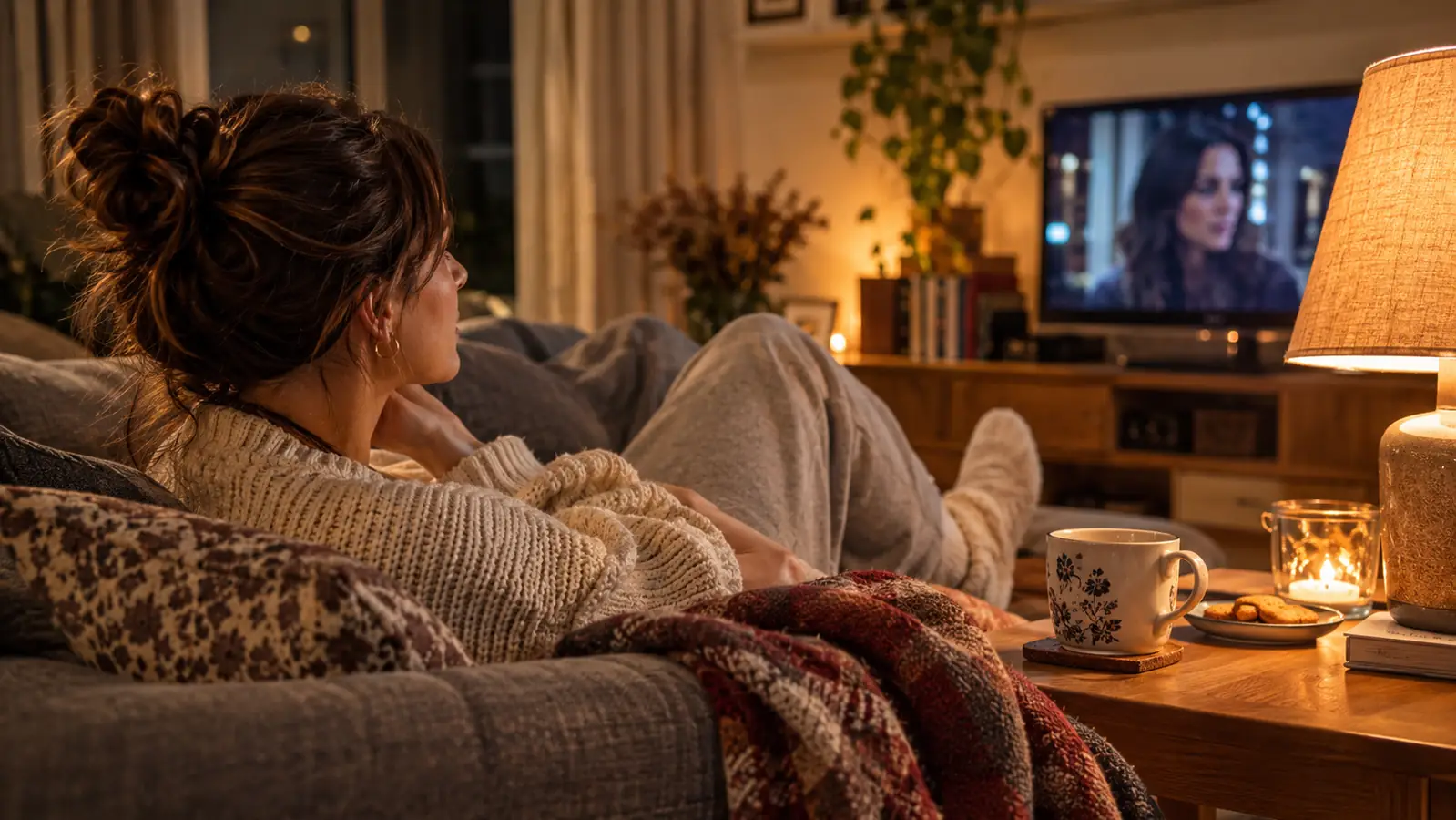
A little about me so you know where I'm coming from. I'm Carla Benton, I'm 58, and I live in Savannah, Georgia with my husband Ray. I spent thirty years standing at a dental chair, which means my knees have strong opinions by the end of the day. I started at-home red light therapy about two years ago, after my doctor gave me the okay to try it alongside my usual stretches. I use it in the corner of my spare bedroom, and sometimes on the living room couch while Ray and I watch a movie. I'm not a medical professional and I'm not going to promise you anything. I'll just tell you what I noticed when I put the bonodave pad next to a typical waist-style red light belt, and what I'd check before spending money on either. If you're comparing the same two options, I hope this saves you some of the back-and-forth I went through. I'll also tell you right now: I don't think you can make a terrible choice here. Both of these do the same basic job. The difference is how they fit into your day, and that's a very personal thing.
| bonodave pad | Red light belt | |
|---|---|---|
| Best for | Knees, shoulders, back, neck, waist; anywhere the strap can reach | Waist and abdomen, where a belt is designed to sit |
| Light spectrum | Each bead has three chips: one 660nm red and two 850nm near-infrared | Usually 660nm red light only, sometimes with a second wavelength |
| Pulse mode | 10Hz pulse mode built in | Mostly steady light with a simple timer |
| Power source | Corded, so you stay near an outlet | Often rechargeable, so you can move around |
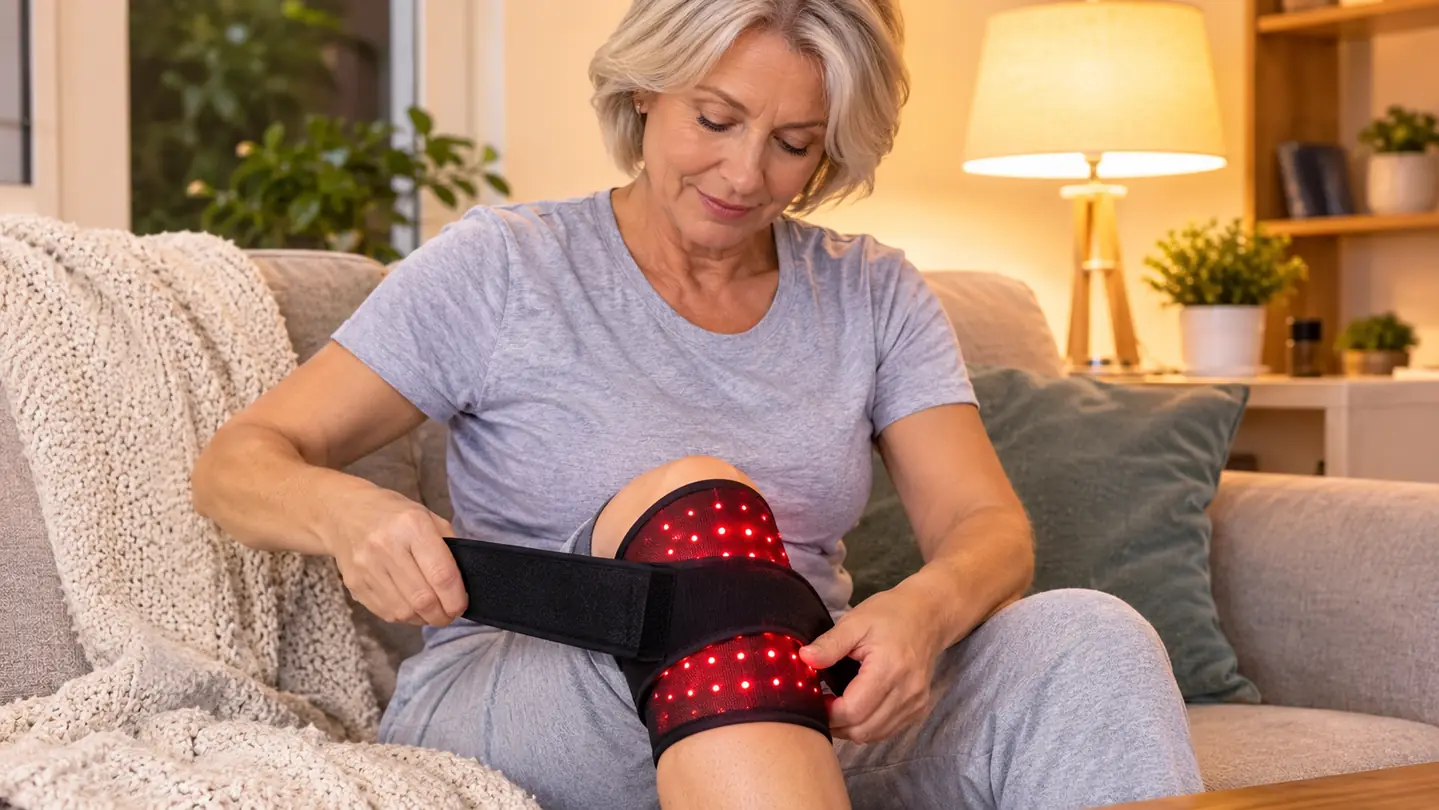
| Fit on a knee or shoulder | Elastic strap wraps small joints snugly | Wide belt is awkward on anything but the waist |
| Fit on the waist | Works, but you adjust the strap each time | Purpose-built to sit on the waist and stay put |
| Shut off | Automatic shut off | Timer-based shut off on most models |
Where the bonodave pad Wins
The bonodave pad's biggest advantage is that it isn't stuck on one body part. The pad is made of fabric and comes with an elastic strap, so I can wrap it around my knee, hold it against a shoulder, or lay it across my lower back. For me, that's the whole point. My knees are the reason I started, but I also have days when my shoulder or my low back wants attention, and one pad covers all of those. A belt that only fits the waist wouldn't do a thing for the knee that actually hurts. I remember the first time I used it on my knee while Ray and I were watching a movie. I wrapped it snug, tucked the cord so it wouldn't trip anyone, and just sat there. It was warm, it was quiet, and I didn't have to think about it. That's exactly what I want from a session. No fiddling, no holding it in place, just sitting there letting it do its thing while the movie plays. Ray knows not to ask me questions during the first twenty minutes of a show, because I'm not paying attention to anything except the warmth on my knee. That flexibility is the reason I haven't felt the need to buy a second device.
The light itself is the other reason I keep reaching for it. The bonodave pad uses a 3-in-1 chip, which means each lamp bead carries one 660nm red light chip and two 850nm near-infrared chips. The near-infrared is the part I wanted, because it's the wavelength that reaches deeper. Having red and near-infrared together in the same pad is what made it feel like a smarter buy than a single-wavelength device. It also runs at a 10Hz pulse mode, which I didn't think I'd care about, but I've come to like the gentle rhythm during a session. I also like that the pulse mode is built in, not something I have to program. I'm not handy with gadgets, and this one doesn't ask me to be. It's almost like a slow heartbeat, and it makes the twenty minutes feel shorter, not longer. And because it's corded with automatic shut off, I can start a session, get comfortable, and not worry about it. I don't have to keep an eye on a timer or wonder if I left it running. When it's done, it's done. That's the kind of feature you don't appreciate until you've had a device that doesn't have it. The pad itself is light, about 0.56 kilograms, which is a little over a pound, and the elastic strap holds it in place without me having to hold it. That matters when you want to relax for twenty minutes instead of babysitting a device.
I'll also say this about the warmth. The listing describes it as gently warm, and that's been my experience exactly. It's not hot, not uncomfortable, just a steady warmth that makes it easy to forget you're wearing it. For someone who comes home with tight knees after a long day, that warmth is half the reason I look forward to the session. It's become part of my evening wind-down, right up there with making tea and picking a movie with Ray. Some nights I use it on my knee, some nights my shoulder, and some nights I just sit with it across my lap while we watch something. The pad doesn't care which body part shows up.
Where the Red Light Belt Wins
The belt's advantage is that it's built for one job and does it without fuss. If your goal is your waist or abdomen, a belt is the easier tool. It buckles around you, stays where you put it, and you don't have to adjust an elastic strap every time. Most of the belts I looked at are also rechargeable, which means you can wear one while you move around the house, fold laundry, or sit at a desk. The bonodave pad is corded, so you're tied to an outlet. That's fine in my spare bedroom, but it's not something I can wear while I'm doing anything else. If your mornings are busy and the only time you have is while you're making coffee or checking email, a belt fits that life better. It's the difference between a session you have to plan for and one you can just slip into. I have friends who wear theirs while they tidy up the kitchen, which you obviously can't do with a corded pad. A belt is also easier to pack if you travel, since there's no cord to coil up.
I'd also say a belt is usually the lower-stakes way to start. They tend to cost less, they're simpler to understand, and there's no learning curve. If you're not sure whether red light therapy is something you'll stick with, a belt is an easier first try. The tradeoff is that you're committing to one body part. I've talked to people who bought a belt for their waist and then realized their knee was the thing that needed attention. A belt can't follow you there. The bonodave pad can. So the question isn't really which device is better. It's which body part you're trying to help, and how much you want to be able to move around while you do it. If you're the kind of person who can't sit still for twenty minutes, the belt is probably the honest answer, because you'll actually use it.
There's also something to be said for the simplicity of a belt. No cord to manage, no strap to reposition, no decision about where to put it. You put it on, you turn it on, you go about your business. For some people, that's the difference between using it every day and letting it gather dust in a closet. I'm a pad person, but I understand why belts have such a loyal following. If the path of least resistance is what gets you to use it, that's a real advantage, not a small one.
Want one device that moves from knee to shoulder to back?
The bonodave pad is the one I reach for on stiff evenings. It wraps where it needs to, it's corded so I can't forget to charge it, and the 660nm red and 850nm near-infrared chips are in the same pad. Check today's price on Amazon and see if it fits your routine.
Amazon Check Today's Price on Amazon →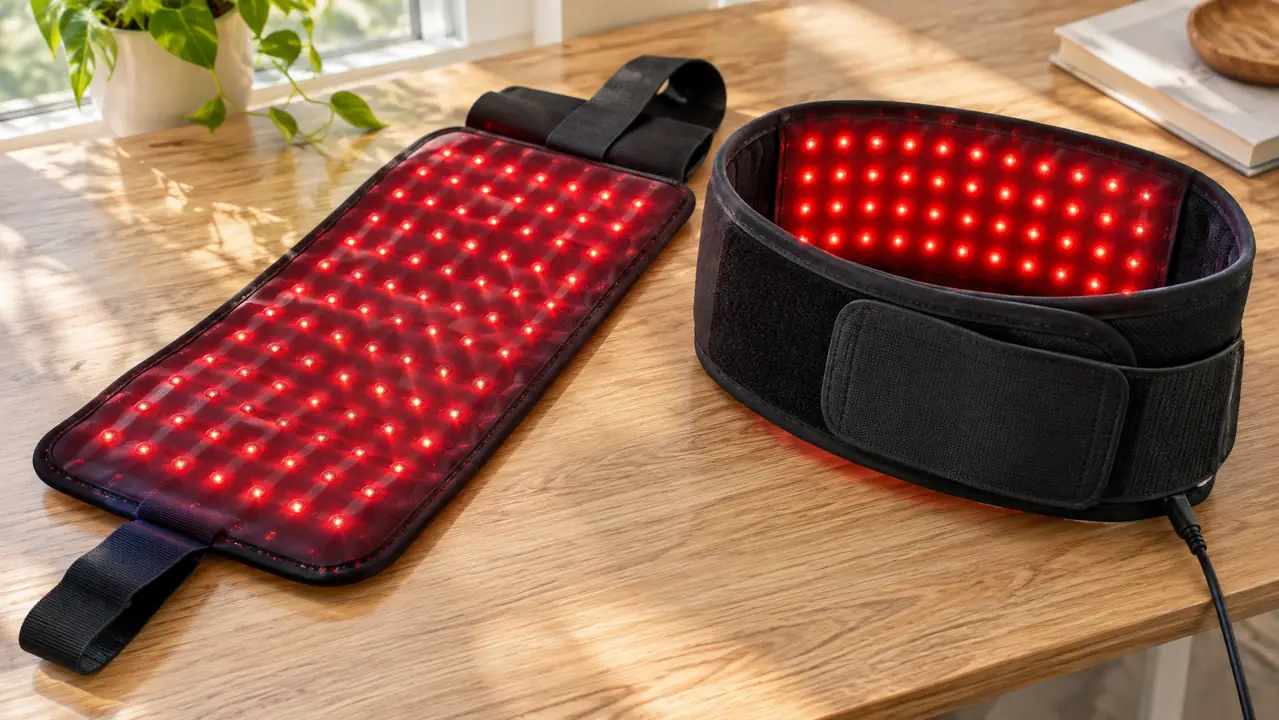
Who Should Buy Which
Buy the bonodave pad if your trouble spots are your knees, shoulders, back, or more than one area. Buy the belt if your goal is specifically your waist or abdomen, or if you want something rechargeable you can wear while you move around the house. That's the honest line I've landed on after using both, and it hasn't changed in the months since.
Here's the thing I tell everyone who asks me about red light at home: the best device is the one you'll actually use. I chose the bonodave pad because my routine changes day to day, and one day it's my knee and the next it's my shoulder. But if you know exactly where you want to use it and you want the simplest possible start, a belt is a perfectly reasonable choice. Check with your doctor before you start if you have any health conditions, give whatever you pick a few weeks of regular use, and don't let anyone oversell it. This stuff is a tool, not a promise. If someone tells you it will fix everything overnight, walk away. The people who get the most out of red light are the ones who treat it like a regular habit, not a one-time fix.
One more thing I'd check before you buy: where you'll actually use it. The bonodave pad needs an outlet nearby, so think about your couch, your bed, or your favorite chair. The belt needs to fit your waist and feel comfortable for twenty minutes, so read the sizing notes if the brand provides them. And whatever you choose, give it time. I didn't notice anything dramatic in the first week. It was more like, after a few weeks, I realized I wasn't reaching for the heating pad as often. That's the kind of change that's easy to miss if you're waiting for a big moment. And if you wear glasses like I do, make sure the device sits comfortably with your usual setup, because twenty minutes is a long time to be uncomfortable.
If you're still torn, let me put it this way. The belt answers one question: does red light help my waist? The bonodave pad answers several: does it help my knee, my shoulder, my back? If you already know the answer you're looking for, the belt is enough. If you're still figuring out where you need it, the pad gives you room to explore. I started with a single-purpose device when I first tried red light, and I outgrew it. With the bonodave pad, I haven't felt that itch. And if I ever do, the pad still works on my waist, so I'm not stuck with a device that only fits one spot.
Still deciding? Start with the one that covers more of your body.
The bonodave pad wraps knees, shoulders, back, and more in a single fabric pad with 10Hz pulse mode and automatic shut off. If that sounds like your routine, check today's price on Amazon.
Amazon Check Today's Price on Amazon →