
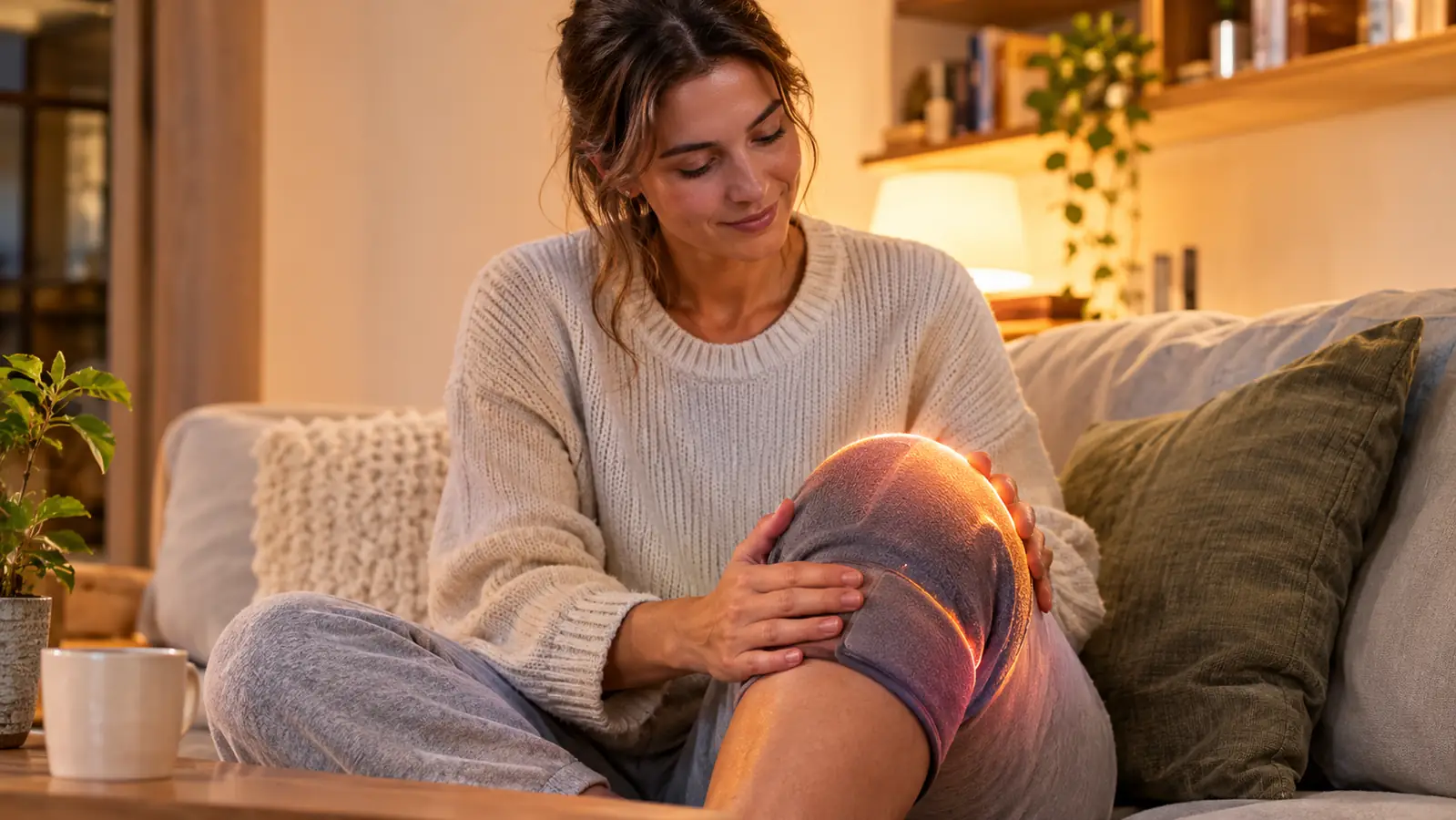
Thirty years of standing chairside left my knees with a permanent opinion about the weather, and my shoulders have their own opinions about reaching for anything above eye level. So when I started reading about red light therapy pads, I did what I always do: I read the reviews, I asked around, and I bought one with my own money. The bonodave Red Light Therapy Pad has been in my spare bedroom for several months now, and I want to tell you exactly what that has been like, the good and the not-so-good.
I am Carla Benton, a retired dental hygienist in Savannah, Georgia. I am not a doctor and I am not selling you anything except my honest notes. I started at-home red light therapy about two years ago for stiff knees and sun-worn skin, and this bonodave pad is the one I reach for most nights. Here is what I have learned.
The Quick Verdict
A warm, easy-to-use pad that wraps anywhere, but check the cord length and your tolerance for pulsing light before you buy.
Amazon Check Today's Price →Want my honest take?
The bonodave pad is the one I keep coming back to for knees, shoulders, and evenings on the couch. Check today's price on Amazon and see if it fits your routine.
Amazon Check Today's Price on Amazon →How I've Used It
My routine is boring on purpose. Most nights, after dinner, I take the bonodave pad to the spare bedroom, wrap it around whichever joint is complaining the loudest, and sit for a twenty minute session while Ray watches something I have already seen. The pad is corded, so I sit close to the outlet. It runs on 10 hertz pulse mode, which means the light pulses rather than staying perfectly still. That took me about three sessions to get used to.
The pad itself is made of soft fabric with an elastic strap, and that strap is the part I was most skeptical about. I have owned wraps that slid down my leg within five minutes. This one stays put well enough that I can fold laundry or read a book while it works. It weighs about 0.56 kg, which is light enough that I forget it is there, and it has automatic shut off, so I have never once worried about falling asleep with it running.
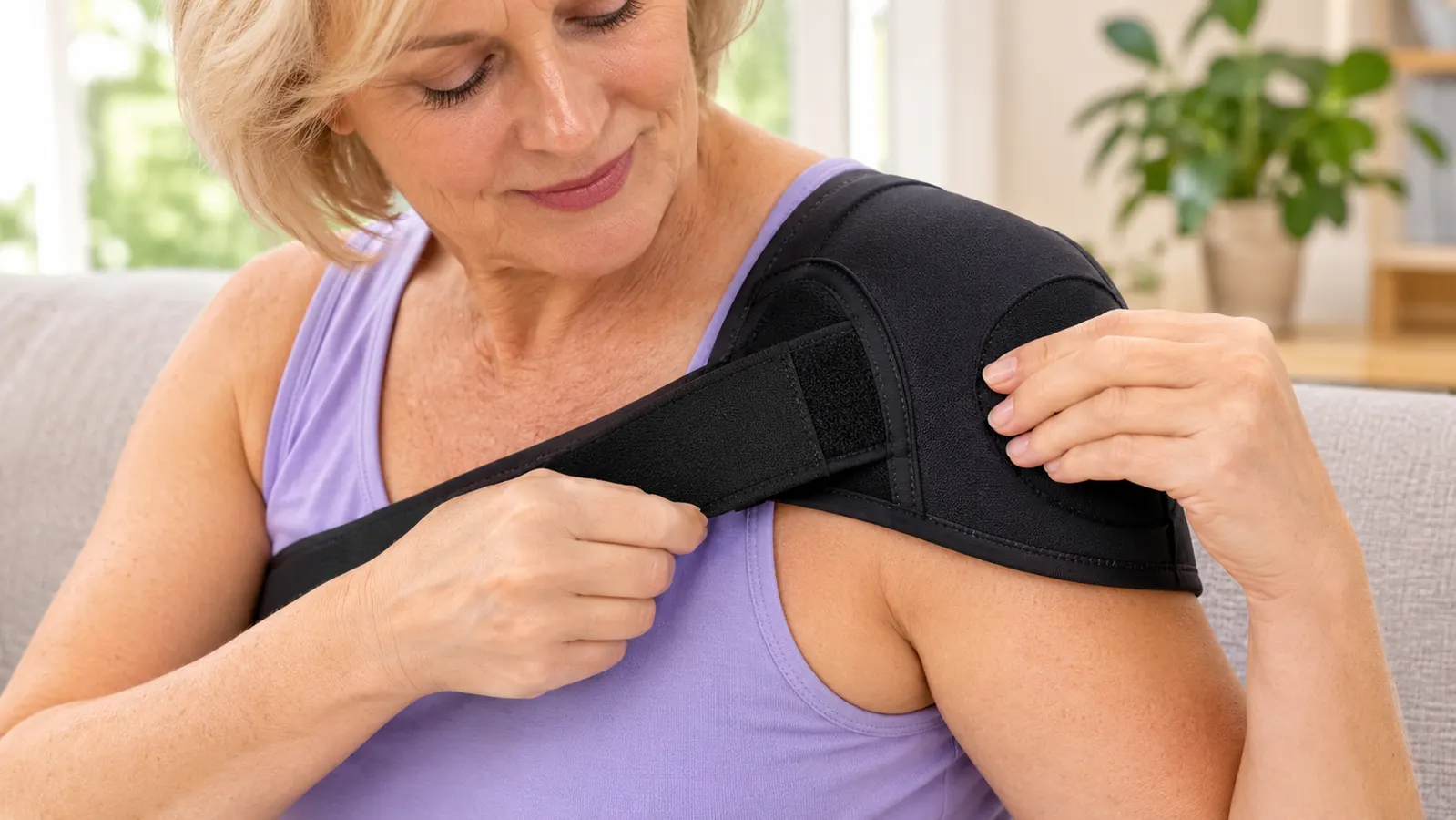
I use it on my knees most often, but the adjustable design means I can wrap it around my shoulder, my lower back, or even my neck when that is the spot that needs attention. The elastic strap stretches, the pad bends, and the listed package dimensions are 11.1 x 8.62 x 2.48 inches. It is not a small device, exactly, but it is easy to store on a shelf.
The first night I used it, I wrapped it around my left knee while I caught up on a show Ray had already finished. I sat too close to the screen, the pulse caught my eye for the first few minutes, and I nearly gave up on the whole idea. By the third session I stopped noticing the pulse, and by the end of the first week I had a small system: pad on the joint, water glass on the table beside me, and a book in my lap. I have used it that way almost every night since, except for the evenings when I fall asleep before the session ends.
Some nights I use it on my neck while I sit at the kitchen table paying bills. The pad stays in place well enough that I can use both hands, which matters more than you might think. On those nights I keep the session shorter, closer to fifteen minutes, because the warmth on my neck is harder to ignore. I have learned to start with the strap looser than I think I need it, then tighten it once the pad is settled.
What the 660nm and 850nm Wavelengths Actually Mean
The listing says the bonodave pad uses an upgraded 3-in-1 chip, with each lamp bead containing three chips: one 660nm red light and two 850nm near-infrared lights. I am not an engineer, so I will tell you what I noticed rather than what the marketing claims. The 660nm red light is the one that feels gentle and warm on the skin. The 850nm near-infrared is the one that seems to reach a little deeper. Together, they make the pad feel like a warm compress that also happens to glow.
What surprised me most is how much I look forward to the warmth. After a long day, the gentle heat is genuinely calming. I have fallen asleep more than once with the pad on my knee and the light still on, and the automatic shut off means I wake up with the pad still wrapped and the light off. That feature alone is worth mentioning, because I am exactly the person who would forget to turn something off.
The 10 hertz pulse mode is the one thing I would warn a friend about. The pulsing is not unpleasant, but it is noticeable, especially the first few times. If you are sensitive to flashing or pulsing light, sit with it for a few minutes before you commit to a full session. I adapted quickly, but I can see how someone else might not.
For the first month I kept a small notebook next to the couch. I wrote down the date, the joint I wrapped, and what I noticed during the session. On a Tuesday in early November I used the pad on my right shoulder after a long day of unpacking boxes, and I remember thinking the warmth felt deeper than it had on my knee. On a Sunday I used it on my lower back while Ray and I watched a movie, and I forgot it was on until the automatic shut off turned the light off. That notebook did not prove anything scientific, but it taught me that consistency mattered more than which joint I chose. The nights I used it were the nights I slept better, and I will leave it at that.
I will not pretend the pad changed my skin in any dramatic way, because I have no way to measure that and I do not want to oversell it. What I can say is that the warmth feels pleasant on my face and neck when I hold the pad there, and the routine of doing something for myself at the end of the day has value on its own. If you are hoping for a visible change, give it time and keep your expectations reasonable.
How It Held Up Over Months of Use
I have owned this bonodave pad for long enough that the newness has worn off, and that is when you learn what a product is really made of. The fabric still looks good. The elastic strap still stretches and snaps back. The lamp beads all still light up evenly, which I check every few weeks by turning the pad on in a dark room and looking for any dark spots. So far, so good.
The cord is the weak point. It is long enough for my setup, but just barely, and I have to sit closer to the outlet than I would like. If your couch or bed is far from an outlet, measure first. The pad also gets warm, not hot, and I have learned to give it a minute to cool down before I fold it away. Neither of these is a dealbreaker, but they are the kind of thing you want to know before you buy.
I have also learned that the pad works best when I am consistent. A session here and there did not do much for me. Twenty minutes most nights, wrapped on the same joint, has been the routine that feels useful. I cannot promise you any specific result, because I am not a doctor and everyone is different, but I can tell you that the ritual itself has become something I look forward to.
In the third month I dropped the pad on the bathroom floor while carrying it to the bedroom. It landed flat on the tile and I held my breath for a second. I plugged it in, started a session, and every lamp bead lit up the same as before. I have also checked the stitching where the strap attaches to the pad, because that is where a cheaper wrap would fail first. It is still tight. The only real wear I can point to is a slight bend in the cord where I fold it for storage, and that has not caused any problems.
I clean the pad about once a month with a slightly damp cloth, then let it air dry before I fold it away. The fabric has not pilled or frayed, and the strap has not stretched out of shape. I avoid folding it tightly, because I do not want to put a crease in the lamp beads. A loose fold on the shelf has kept it looking almost new.
The Pros and Cons
What I Liked
- Soft fabric pad with an elastic strap that stays put while I read or fold laundry
- Automatic shut off means I never worry about falling asleep with it running
- Lightweight at 0.56 kg and easy to store in the original box
- Adjustable design wraps around knees, shoulders, lower back, and neck
Where It Falls Short
- Corded, so I need an outlet within reach of wherever I sit
- 10 hertz pulse mode takes a few sessions to get used to
- The pad gets warm and needs a minute to cool before folding
- Consistency matters more than I expected, so it is not a set it and forget it device
The fabric still looks good, the strap still snaps back, and every lamp bead still lights up evenly months later. That is what I actually care about.
What I'd Tell a Friend Before They Buy
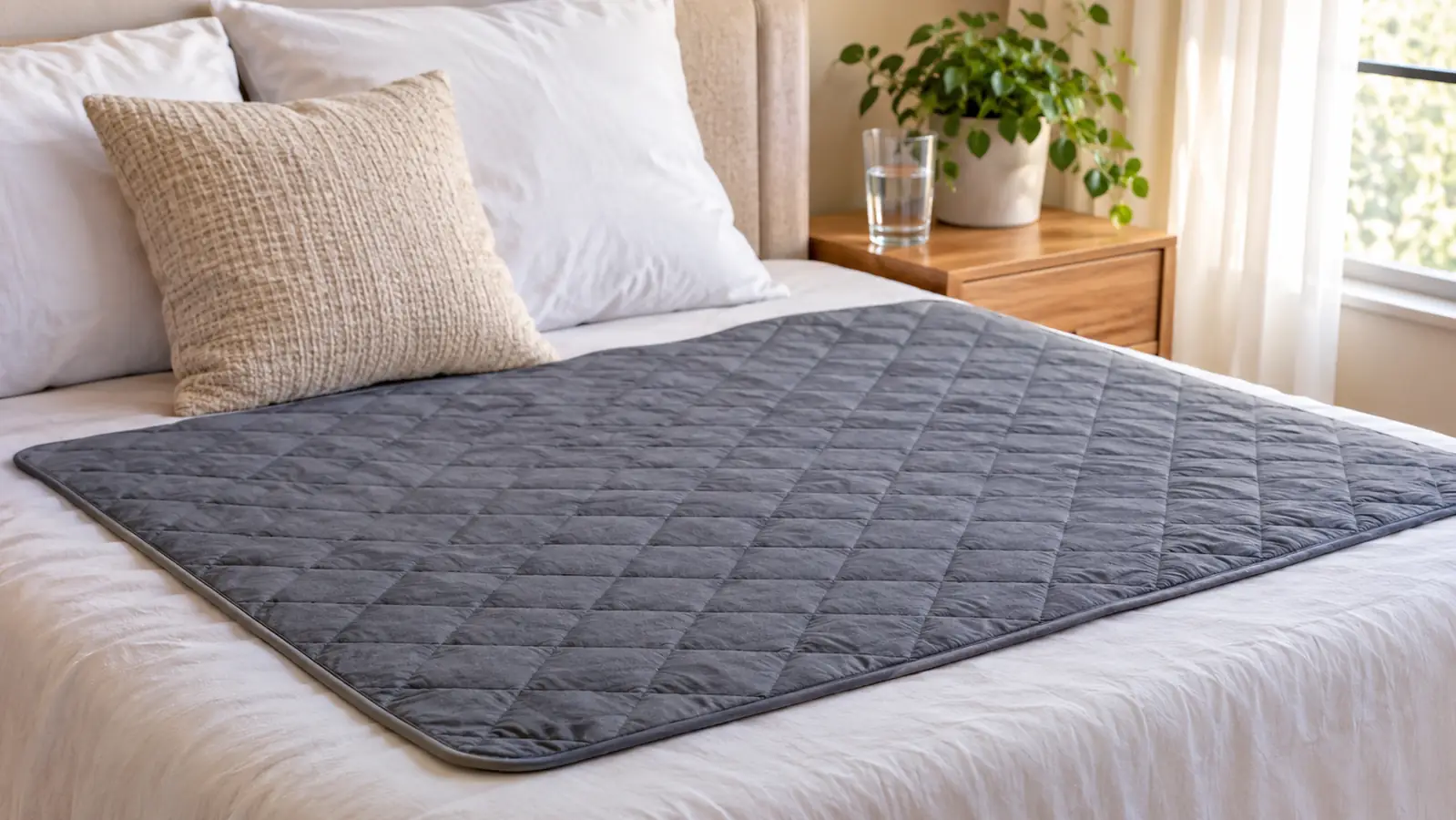
First, check the cord. The bonodave pad is corded, which means you need an outlet within reach of wherever you plan to sit. Second, think about the pulse mode. If you are sensitive to pulsing light, this may not be the pad for you, or you may need to ease into it. Third, think about where you will store it. It is not huge, but it is not tiny either, and the fabric needs to be folded, not crumpled.
I would also tell a friend to be honest about what they want from red light therapy. I started for my knees and my skin, and I have stuck with it because the warmth and the routine make my evenings better. If you are expecting a dramatic change overnight, you will be disappointed. If you are looking for a pleasant, consistent addition to your evening routine, this pad is a reasonable place to start.
Before you order, take a tape measure from the outlet to the spot where you usually sit. I did not do that, and I ended up moving a small table closer to the wall so the cord would reach without stretching across the walkway. I also learned to keep the pad on the couch arm during a movie, because it is easier to reach there and the cord stays out of the way. Little things like that matter more than the wavelength numbers, at least for how I live.
One more thing: buy from a seller you trust, and read the return policy before you click. I say that because red light therapy is a personal thing, and what works for me might not work for you. A pad that feels warm and calming to me might feel too pulsing to someone else. Knowing you can send it back takes the pressure off the first few sessions.
Who This Is For
This bonodave pad is for someone like me: a person with achy joints who wants a warm, easy way to spend twenty minutes doing something that feels productive. It is for people who like the idea of red light therapy but do not want to sit in front of a big panel. It is for people who want one device they can wrap around a knee one night and a shoulder the next.
If you are the kind of person who will actually use it most nights, the cord and the pulse mode become small tradeoffs. If you are the kind of person who wants a device you can forget about, this one asks a little more of you. I am the first kind, so I have been happy with it. I also think this pad suits people who like a little structure to their evenings. The twenty minute session gives me a reason to sit down, breathe, and stop checking my phone. That alone has been worth the shelf space.
Who Should Skip It
Skip it if you need something cordless, because the cord will annoy you. Skip it if you are sensitive to pulsing light, because the 10 hertz pulse mode is a core part of how this pad works. And skip it if you are looking for a medical treatment, because this is a wellness device, not a prescription. If any of those sound like you, keep looking. If not, this pad has been a genuinely pleasant part of my routine.
Also skip it if you cannot commit to regular sessions. The pad does not do the work on its own. And if you have a health condition that might make light therapy a question, check with your doctor before you start. That is the same advice I give anyone who asks me about these devices.
Still on the fence?
I have used this pad for months, and I would buy it again. Check today's price on Amazon and see if it fits your routine.
Amazon Check Today's Price on Amazon →