
When I first brought home a red light panel, I made every beginner mistake you can imagine. I put it in the darkest corner of the spare bedroom, sat too close, stared right at it, and then wondered why my eyes felt tired and my knees still ached. The Viconor Red Light Therapy Lamp for Face and Body with Stand changed how I think about setup, but only because I stopped treating it like a lamp and started treating it like a piece of furniture that needs a home.
If you are reading this, you probably already know the basics: red light therapy uses specific wavelengths of light, and the Viconor panel uses 660 nm red light and 850 nm infrared light across 120 LEDs. What nobody tells you is how to actually set the thing up so you use it more than twice. This guide is the conversation I wish someone had with me before I started.
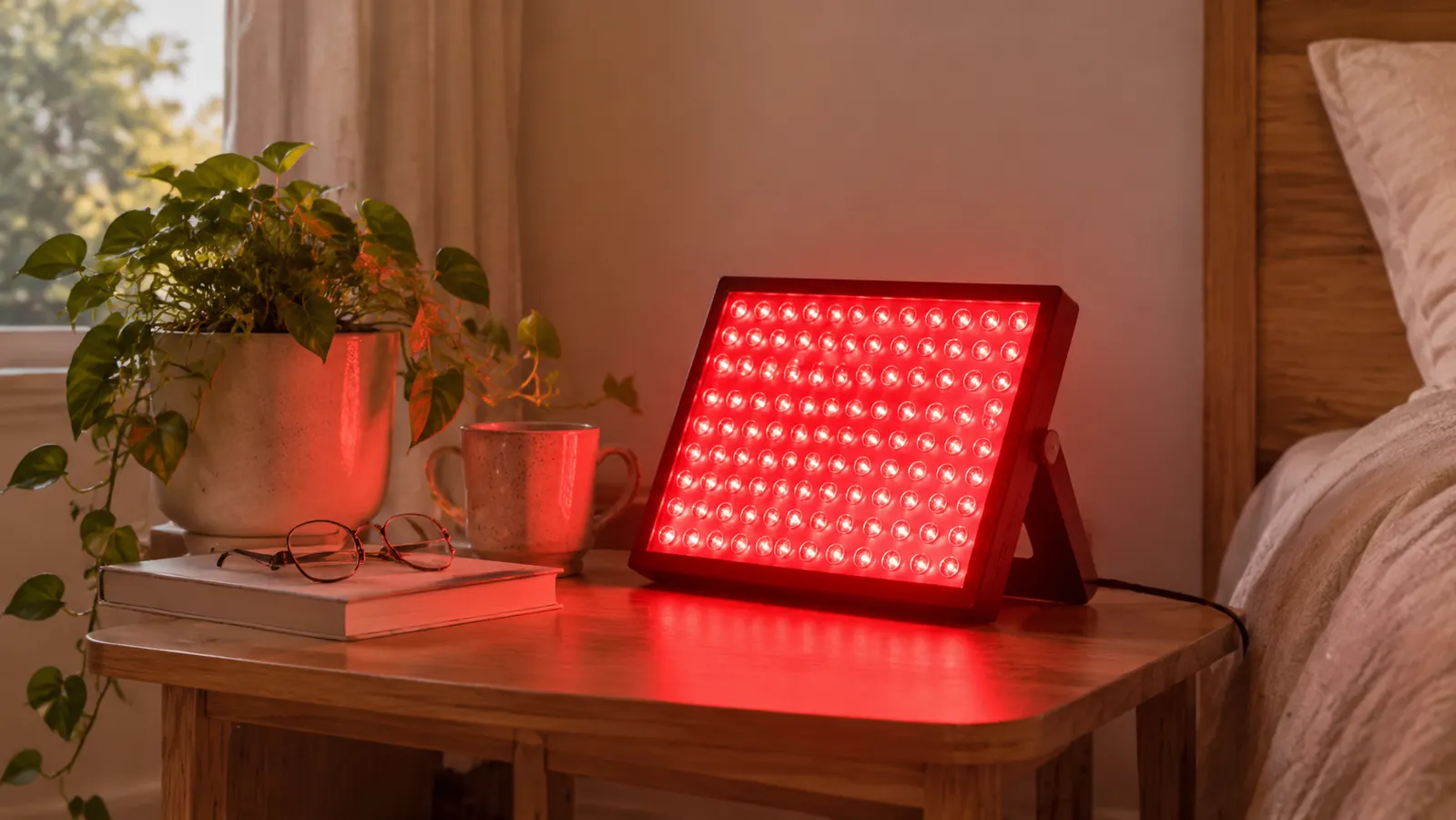
The Viconor panel I keep on a low table in the spare bedroom
It is not the cheapest panel on Amazon, and it is not the fanciest. It is the one I reach for because it is simple to set up and simple to use. Check today's price on Amazon before you decide.
Amazon Check Today's Price on Amazon →Step 1: Pick the right spot before you unbox anything
The single biggest mistake I made was choosing a spot based on where the panel looked nice instead of where I would actually sit still for 15 minutes. The panel needs to be at a height where the light reaches the part of your body you are treating. For me, that means a low table in the corner of the spare bedroom, about knee height, so I can sit on the floor with my back against the bed and let the light hit my knees directly.
If you are treating your face, the panel needs to be at face height. If you are treating your back, you need to be able to sit or stand with the panel behind you. Think about what you are actually trying to do, then find the spot that makes that position comfortable enough to hold for 15 minutes. A spot that requires you to twist into an awkward position will get used exactly once.
The Viconor panel measures about 16.7 by 12.1 by 3.8 inches and weighs just over 7 pounds, so it is light enough to move around, but you will not want to move it every day. Pick a permanent home for it. My spare bedroom corner works because the room is quiet, the light does not bother anyone, and I can close the door if Ray is watching something loud in the living room. I spent a full week testing the spot before I committed. I sat in that corner every evening for seven days, just to see if I would still want to use the panel there by Thursday. I did, and that is how I knew it was the right place.
Step 2: Unbox it, but do not plug it in yet
The Viconor panel comes with the stand already attached in most cases, but check the box before you assume anything. The package dimensions are about 16.7 by 12.1 by 3.8 inches, and the whole thing weighs about 7 pounds, so the box is small enough to open on a table without making a mess. I cleared the kitchen table first, because I learned the hard way that opening a box on the couch means losing small parts in the cushions.
Lay everything out on a flat surface. Look for the power cord, the stand, and any screws or small parts. The Viconor panel works right out of the box, which is one of the reasons I chose it over some of the more complicated panels I looked at. There is no app to download, no Wi-Fi to connect, no sensor to calibrate. It is a panel with 120 LEDs, and when you plug it in, it lights up. My first session almost did not happen because I spent 20 minutes looking for a button that does not exist. There is no button. You plug it in and the light comes on.
Before you plug it in, wipe the surface of the panel with a soft, dry cloth. I do not know if it is dust from shipping or just static, but the first time I unboxed mine, there was a thin film on the surface. A quick wipe makes the light noticeably cleaner. Do not use any cleaning solution on the panel itself. Just a dry cloth. I keep a microfiber cloth in the drawer of the side table now, so I can give the panel a quick wipe before I settle in.
Step 3: Find your distance and your angle
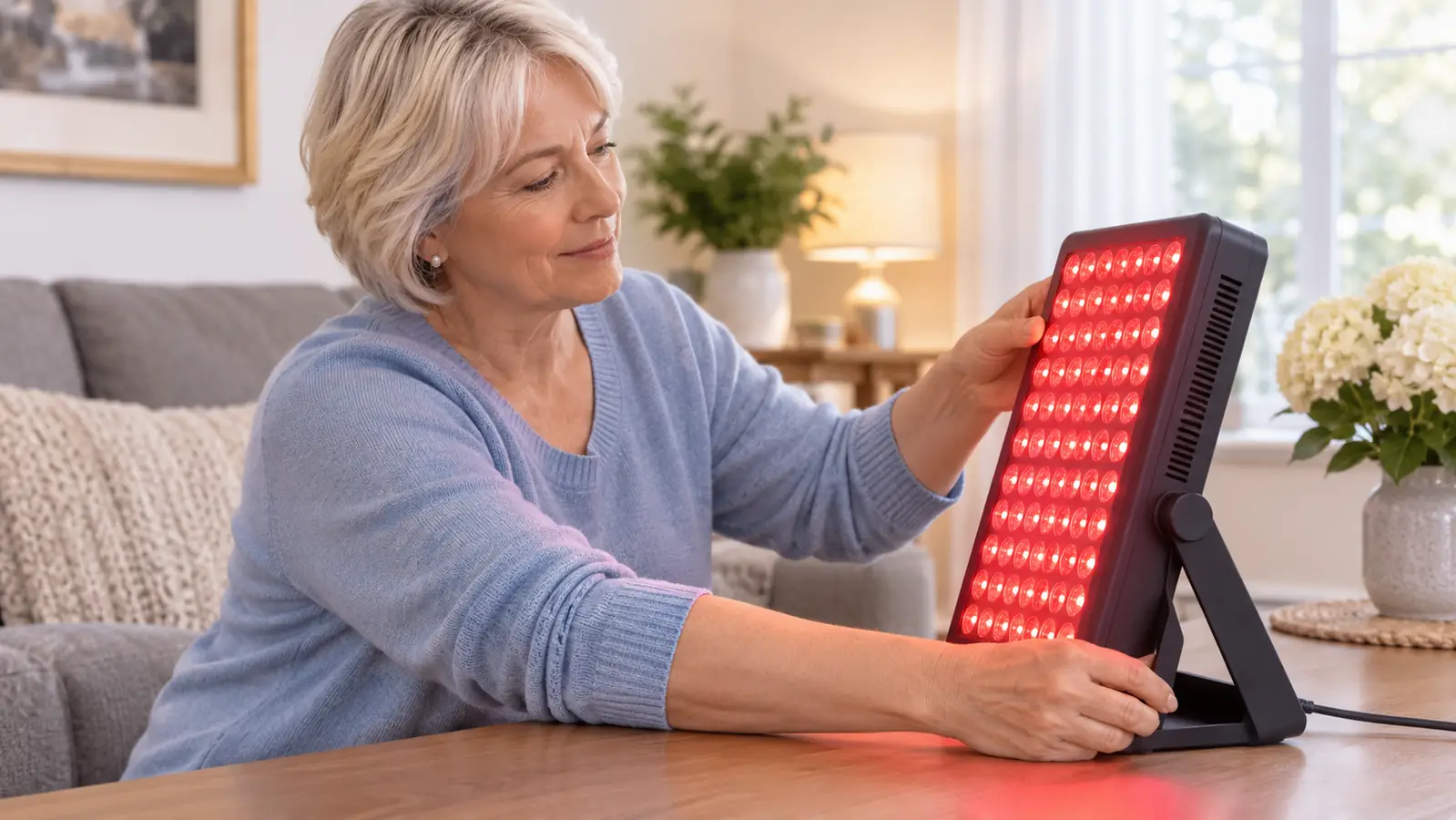
This is the step I got wrong for weeks. I sat so close to the panel that the light felt intense on my skin, and I thought that meant it was working harder. In reality, I was making myself uncomfortable for no reason. The curved surface design of the Viconor panel focuses the light, so you do not need to be pressed up against it. I settled on about 6 to 10 inches away for my knees, and about 12 inches away when I use it on my face. I measured it with a tape measure the first few times, because my instinct was to lean in.
Angle matters just as much as distance. The panel should be perpendicular to the area you are treating. If you are treating your knees, point the panel straight at your knees, not at your shins. If you are treating your face, tilt the panel slightly upward so the light hits your cheeks and forehead evenly. The stand on the Viconor panel lets you adjust the angle, and I have found that a small tilt makes a big difference in how evenly the light spreads. One evening I left the panel tilted too far down and spent the whole session wondering why my left knee was in shadow. A two second adjustment fixed it.
Do not stare directly at the LEDs. The 660 nm red light is visible, and it is bright. I keep my eyes closed or look slightly to the side when the panel is on. The 850 nm infrared light is not visible, so you will not see it, but it is still part of the treatment. Just let the panel do its thing and do not try to watch it work. The first time I used it, I kept peeking to see if anything was changing. It was not, and my eyes paid for it. Now I close my eyes and let the timer be the boss.
Step 4: Build the habit with a 15 minute session
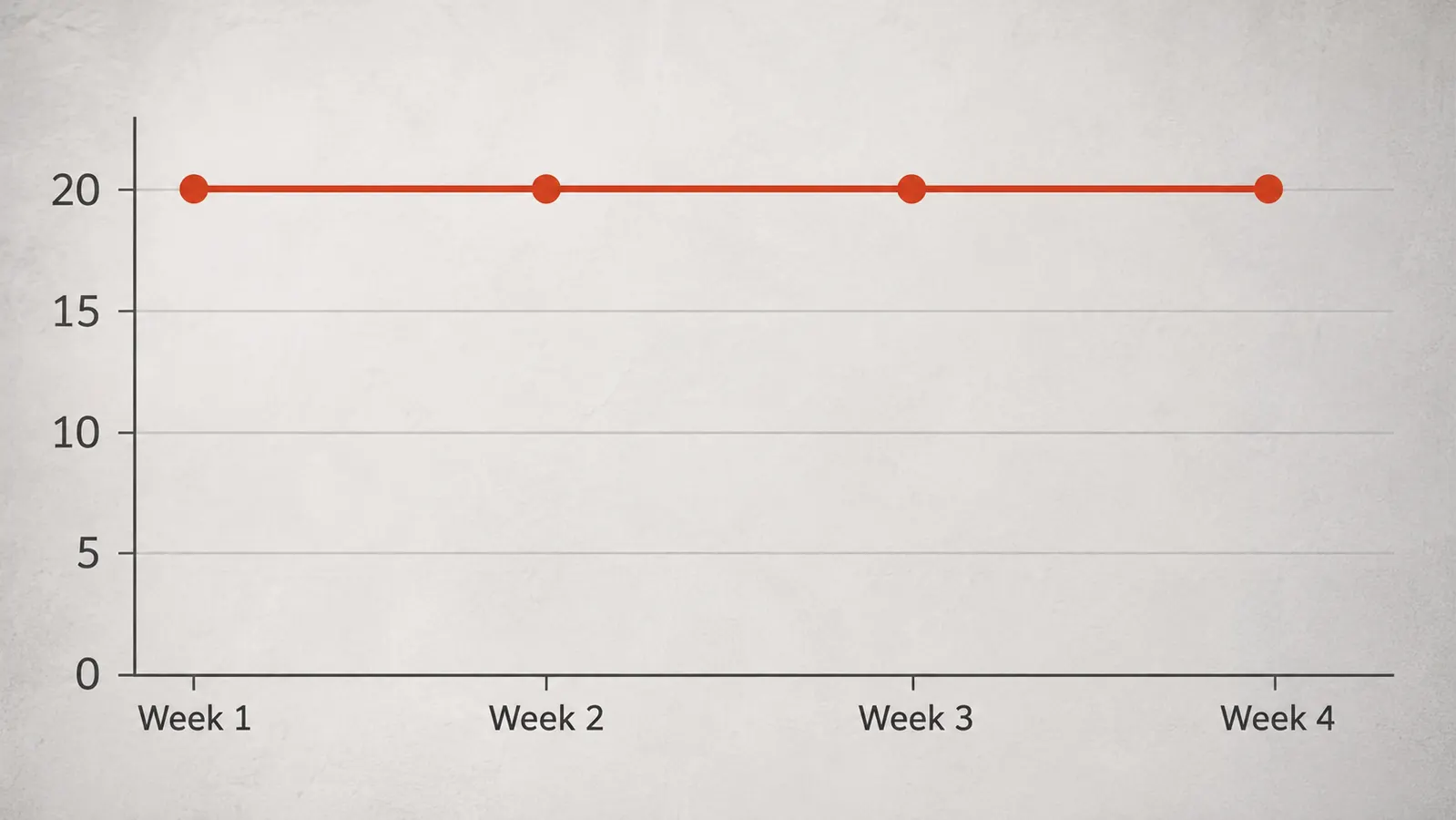
The Viconor panel instructions suggest using red light therapy for 15 to 30 minutes every day. I started with 15 minutes and stayed there for the first two weeks. That was enough to build the habit without feeling like a chore. I set a timer on my phone, put the panel on the low table, and sat with my back against the bed while the light did its work. The first few nights, I checked the timer every couple of minutes. By the end of the first week, I stopped checking and just let the alarm tell me when it was done.
The key is to make the session something you look forward to, not something you dread. I use the 15 minutes to close my eyes and breathe. Ray sometimes comes in and sits with me, and we talk about the day without looking at our phones. On nights when I do not feel like sitting still, I use the panel while I listen to a podcast. The point is to find a way to make the session feel like a break, not a task. One night I was so tired I almost skipped it, but I told myself I would just sit for five minutes. I ended up doing the full 15 because I was already comfortable.
If you are treating multiple areas, you can split your session. I do 10 minutes on my knees, then move the panel and do 5 minutes on my face. The panel is light enough to move easily, and the stand makes it simple to reposition. Do not try to do everything in one position. Move the panel to where the light needs to be. I tried the opposite for the first week, twisting my neck to get my face and my knees in the same beam, and it was a disaster. Splitting the session fixed it.
Step 5: Keep a simple log so you know what is working
I am not a data person by nature, but I started keeping a one-line log in my phone notes after the first week. The log is simple: date, how many minutes, and what I noticed. After the first month, I could look back and see that my knees felt less stiff on the days I used the panel consistently. That is not a medical claim, it is just what I noticed. Your experience may be different. I also noticed that my skin felt different on the days I remembered to do the full 15 minutes, but I did not write that down until the third week because I was not sure I believed it.
The log also helps you notice when you are skipping sessions. If you see a three day gap, you can ask yourself why. For me, the answer was usually that I had put the panel in a spot that was inconvenient. Moving it to the spare bedroom corner fixed the problem. The panel is now part of the room, not a thing I have to drag out of a closet. When I kept it in the hall closet, I used it twice in ten days. Now that it lives on the low table, I use it almost every evening without thinking about it.
After a few weeks, you will know whether the Viconor panel is something you will actually use. If you are not using it, do not blame yourself. Change the setup. Move it to the living room. Put it on the couch next to you during a movie. The best setup is the one you will actually use. I moved mine three times before I found the corner of the spare bedroom, and that was the moment it stopped being a gadget and started being part of my evening.
What Else Helps
A few things made my sessions more comfortable and more consistent. A small pillow for your back if you are sitting on the floor. A phone timer so you do not have to watch the clock. A pair of comfortable shorts if you are treating your knees. None of these are necessary, but they all make the session feel less like a medical procedure and more like a small ritual. I also keep a glass of water on the side table, because fifteen minutes is long enough to realize you are thirsty.
I also learned to use the panel while I was doing something else. The Viconor panel does not need your full attention, so I often run a session while Ray and I watch a movie. The panel sits on the couch beside me, angled at my knees, and the red glow is actually kind of cozy. It is the same 15 minutes I would have spent sitting anyway, so it does not feel like extra time. On movie nights, I set it up before we press play, and by the time the opening credits are over, I have forgotten it is on.
The best setup is the one you will actually use. I moved the Viconor panel three times before I found the corner of the spare bedroom, and that was the moment it stopped being a gadget and started being part of my evening.
Ready to find a spot for your own Viconor panel?
The Viconor Red Light Therapy Lamp for Face and Body with Stand is the panel I reach for every evening. Check today's price on Amazon and see if it earns a spot in your home.
Amazon Check Today's Price on Amazon →