
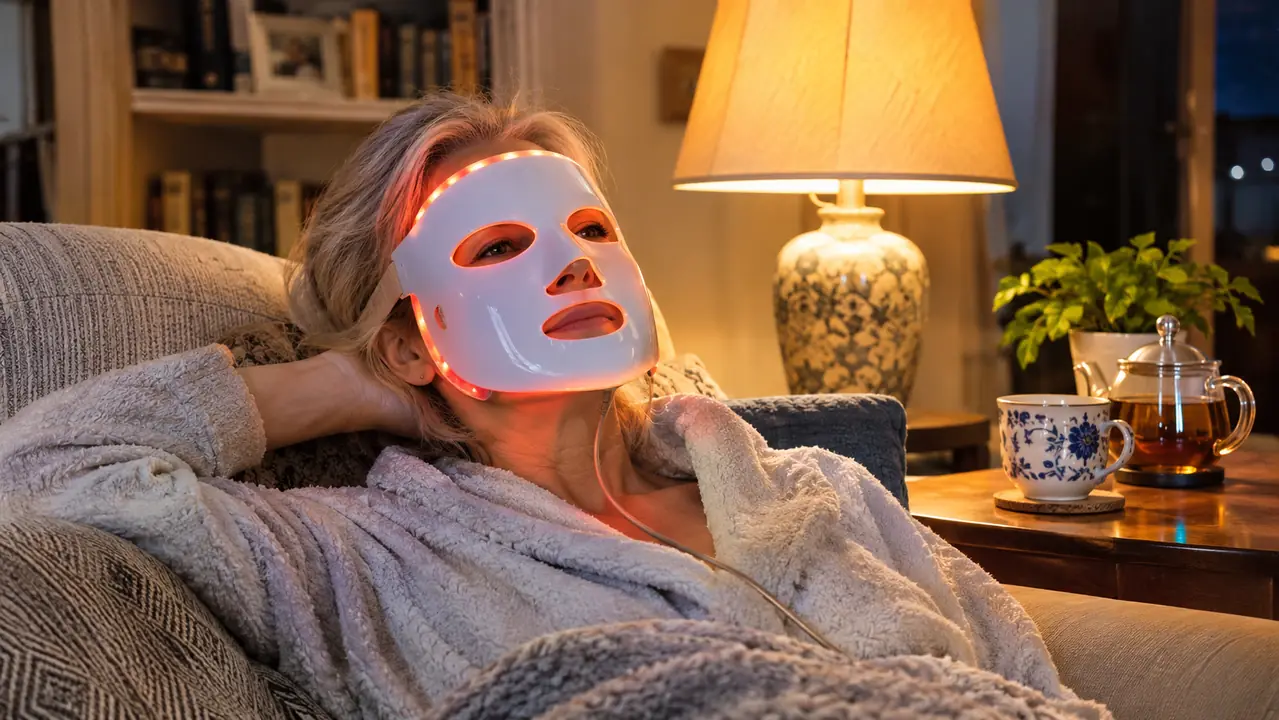
I bought my first LED face mask about two years ago, mostly out of stubbornness. I had spent thirty years standing chairside as a dental hygienist, and my Georgia-summer skin had the dry, sun-worn look to show for it. I also had zero patience for anything that felt like a complicated beauty ritual. So when a friend kept talking about her red light mask, I asked the only question that mattered to me: how much of this is just sitting there with a glowing thing on your face?
The honest answer, after a lot of evenings with the INIA Red Light Therapy Mask on the couch next to Ray, is that using one is genuinely simple. But simple does not mean obvious. The first few sessions have a learning curve, and most of the mistakes I made were the kind nobody warns you about. This guide is the one I wish I had found before I opened the box.
The only tool you need for a 10-minute session
The INIA Red Light Therapy Mask for Face combines 630nm red light with 850nm near-infrared in one lightweight mask. Four modes, 220 LED chips, and a rechargeable battery that means no cord tangling with your movie night blanket.
Amazon Check Today's Price on Amazon →Step 1: Start with a clean, dry face
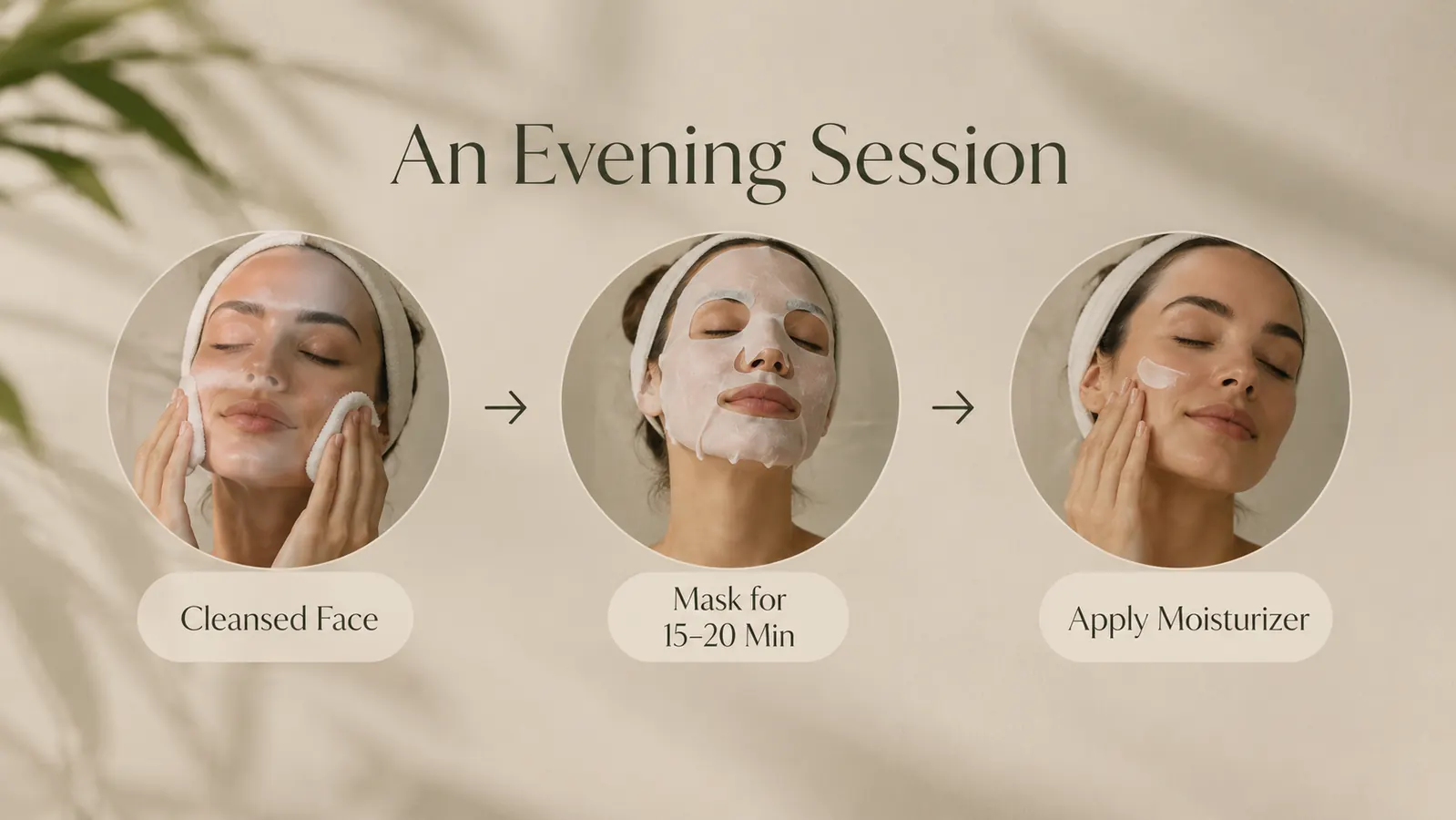
I know this sounds like the kind of instruction you skim past. It is the one that matters most. The mask sits directly against your skin, and anything on your face, leftover moisturizer, sunscreen, the faint shine of a long day, sits between the light and your skin. I wash my face, pat it dry, and wait a minute or two before I put the mask on. That waiting part took me a while to learn. The first time I used the mask, I had just washed my face and the damp patches on my cheeks made the mask feel cold and slippery for the first few minutes. Now I keep a hand towel on the bathroom hook, dry off properly, and give my face a full minute before I walk to the couch.
One thing I learned the hard way: do not apply a thick layer of serum or cream first. It is not dangerous, but it makes the mask slide around and leaves you adjusting it every ninety seconds, which completely defeats the point of a hands-free session. If you want to use a product with your session, a thin water-based layer is plenty. I save the heavier creams for after. My rule of thumb is that if my skin still feels tacky two minutes after applying something, that something belongs on the after side of the routine, not the before side.
Step 2: Fit the mask over your ears and check the seal
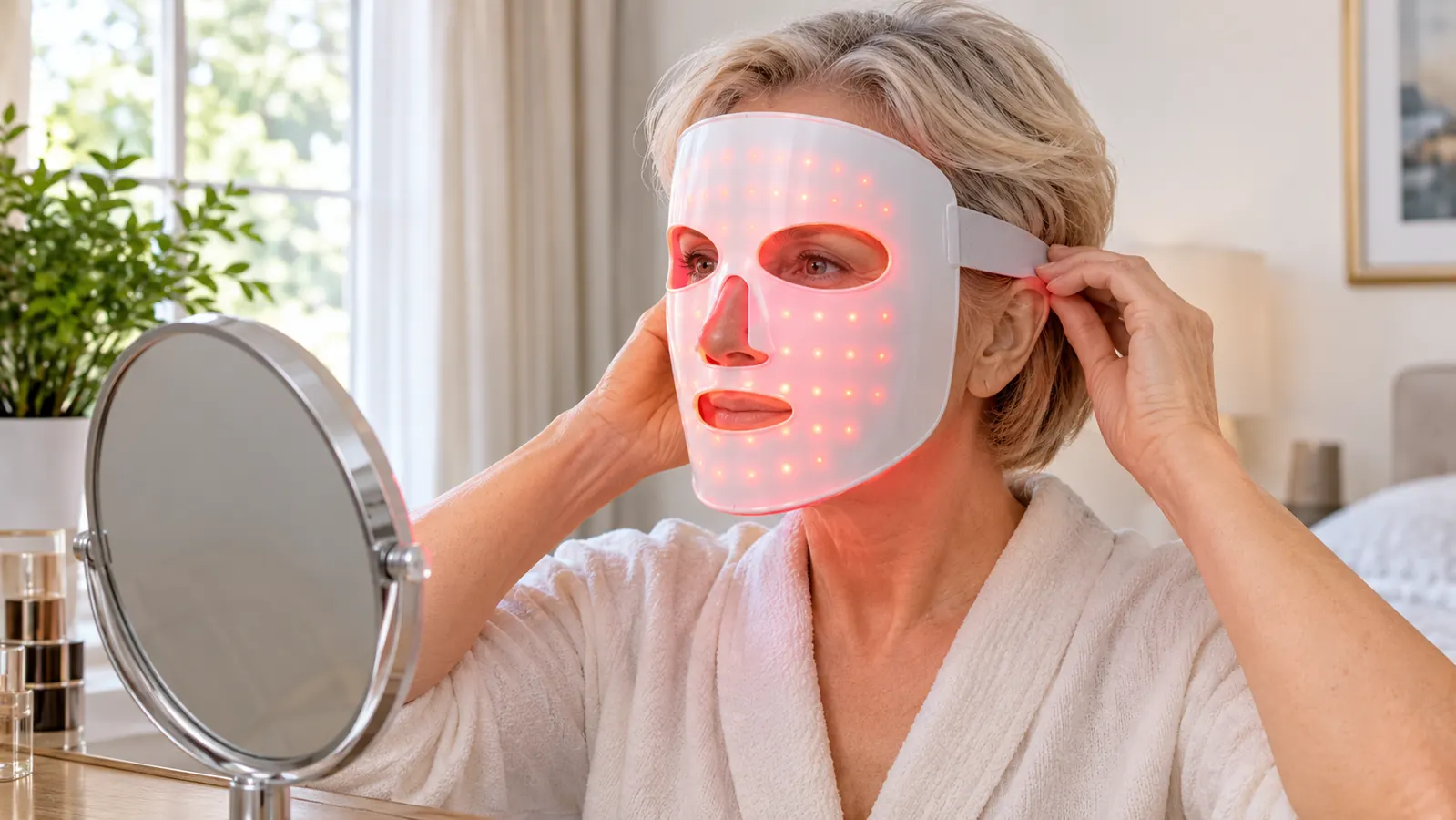
The INIA mask has a flexible design that wraps around your face and holds itself in place with straps that go over your ears. Getting the fit right takes a few tries. The first time, I had it too loose, and it slid down onto my nose while I was reading. The second time I overcorrected and it pressed hard enough behind my ears that I noticed it for the whole session. It took me three evenings to find the middle ground, and now I can get it seated in under a minute without a mirror.
The right fit is snug but not tight. You want the mask to stay put when you look down at your book, and you want to forget it is there after the first minute. Adjust the ear loops before you turn the light on. Once the session starts, you will not want to fiddle with it. One detail that helped me: I put the top of the mask on my brow first, then hook the straps over my ears one at a time, left then right. Doing it in that order keeps the mask from twisting, which was my problem on night two when one side sat higher than the other and the light felt uneven.
Step 3: Pick your mode and set a timer
The INIA mask gives you four light modes to choose from, which sounds more complicated than it is. The first mode is the one most people will use most nights: red light and near-infrared together for a general session. The other modes shift the balance of red and blue light, and which one you pick depends on what you are hoping to address on a given evening. On nights when I have been out in the garden all afternoon, I tend to reach for the red and near-infrared combination. On nights when my skin feels a little more oily than usual, which happens to me in July and August, I will switch to one of the blue-inclusive modes instead.
Here is the practical part: the mask does not run itself. There is no auto timer that shuts it off for you, so you are the timer. I set a stopwatch on my phone for ten minutes and put the phone face-down on the arm of the couch. When it beeps, the session is over. A ten-minute session is a genuinely manageable commitment, and it is long enough to feel like you did something without turning your evening into a chore. I tried a five-minute session once because I was tired, and it felt too short to settle into. Ten minutes is the number that stuck.
Step 4: Sit back and let the session happen
This is the step people do not believe until they try it. Once the mask is on and the light is glowing, there is absolutely nothing to do. You cannot scroll through your phone comfortably because the mask blocks your lower peripheral vision. You cannot eat a snack. What you can do is close your eyes, lean back, and let ten minutes pass. I have learned to treat it as the one genuinely still part of my day, which is not something I was good at before I started this.
This is where my routine became a habit instead of a chore. Ray and I watch a lot of movies on quiet nights, and I started running my session during the opening credits. Ten minutes of red light while a movie starts is nothing. It does not interrupt the evening. It does not require a separate block of time. It just happens, and then it is done. By the time the first scene ends, the mask is back on the dresser and I have not missed a line of dialogue. That was the moment I knew the habit would stick, because it finally cost me nothing to keep.
Step 5: Clean the mask and follow with moisturizer
When the timer goes off, I take the mask off, wipe the inside with a soft dry cloth, and set it on the dresser to air out. The mask is a piece of equipment, and a little care keeps it working like the first session. I have never used soap or cleaning solution on it. A dry cloth has been enough for two years. I keep a small microfiber cloth folded next to the dresser lamp, the same one I use every night, so I never have to go hunting for it when the timer beeps.
Then comes the part that actually feels nice. Your skin has just had ten minutes of light, and it is warm and ready to absorb whatever you put on it. I follow every session with my usual moisturizer, the same one I have used for years. The mask does not replace your routine. It slots into it, right before the cream goes on. On cold January nights I add a little extra around my cheekbones, and on summer nights I keep it light. The mask does not care either way, and neither does the routine.
What the four modes actually mean for your evening
The INIA mask combines 630nm red light for surface renewal with 850nm near-infrared, and it gives you four modes to arrange those wavelengths. I will not pretend to be a scientist about it. What I can tell you is what I noticed: the red light session feels gentle and warm, and the near-infrared has a deeper sensation that I can feel in my cheeks. It is not uncomfortable, just noticeable, like the difference between a hand warmer and a heating pad. The first time I felt it, I checked the mask to make sure nothing was wrong. Nothing was. It is just a different wavelength doing a different job.
The blue light modes are the ones I use less often. I have dry, sun-worn skin, and my face does not need much help with oil. If you are someone who deals with the opposite problem, a blue-inclusive mode might be the one you reach for on a given night. The mask makes it easy to switch between modes, so you are not locked into one routine forever. I will say the same thing I tell every friend who asks: give each mode a fair chance for a few sessions before you decide which one you like. My first instinct was to stick with mode one and never touch the others, but trying them all for a week each is the only way I figured out what my skin actually preferred.
What to check before you buy
Before I recommend any mask to a friend, there are four things I tell them to check. First, the battery. The INIA mask runs on one included lithium-ion battery, which means no cord and no sitting next to an outlet. I have used mine on the couch, in the spare bedroom, and once on the back porch. A cord would have changed every one of those sessions. The package dimensions, about 12.68 by 9.09 by 1.93 inches, also tell you the mask is not a tiny travel gadget. It is a real piece of equipment, and you need a place to store it flat.
Second, the number of LED chips. More chips usually means more even coverage, and the INIA mask packs 220 high-energy LED chips across the face. Third, the modes. If you only ever want one setting, a single-mode mask is fine. If you want options, four modes give you room to adjust without buying a second device. I have a friend who bought a one-mode mask and then upgraded within the year because she wanted the near-infrared option. The four modes on the INIA mask meant I never had to have that conversation with myself.
Fourth, and this is the one I almost never see in reviews: the weight. A mask that feels fine for two minutes can feel heavy by minute nine. The INIA mask comes in at about 1.81 pounds, and I have never felt the need to prop my head up during a session. That matters more than you think it will. I have also never felt the battery drain mid-session, which is worth checking on any rechargeable device. A mask that dies at minute seven would be useless to me, and after two years mine has never once cut a session short.
Who this routine is for
This routine is for anyone who has bought a device and then let it gather dust because using it felt like a project. The whole point of the INIA mask is that it fits into a life that is already full. You do not need a dedicated spa corner. You do not need twenty minutes of prep. You need a clean face, ten minutes, and a place to sit. I use the corner of my spare bedroom when I want quiet, and the living room couch when a movie is on. Both work, and neither took any setup.
It is also for people like me who are skeptical of anything that promises too much. I did not buy this mask expecting a transformation. I bought it because the habit was easy enough to keep, and keeping the habit is the only way any of this works. If you are the kind of person who will actually use a device three or four nights a week, this routine will fit you. If you know you will use it once and forget it, no mask on the market will fix that, and I would tell you the same thing over the kitchen table.
What Else Helps
A mask is one piece of a bigger picture. I pair my sessions with the same sunscreen I have worn for years, because protecting skin from the Georgia sun matters more than any light treatment. I also drink more water than I used to, and I try to sleep on my back so the mask does not fight my pillow. None of this is medical advice. It is just what a retired hygienist with sun-worn skin does to make the habit stick. If you have any skin condition or concern, check with your doctor before starting a new light routine. That is the same thing I would tell a friend, and it is the same thing I would tell you.
A mask that feels fine for two minutes can feel heavy by minute nine. At 1.81 pounds, the INIA mask is one I forget I am wearing.
Ten minutes, four modes, one mask
The INIA Red Light Therapy Mask for Face is the one I reach for on movie nights. Four modes, 220 LED chips, and a rechargeable battery that means no cord tangling with your blanket.
Amazon Check Today's Price on Amazon →