
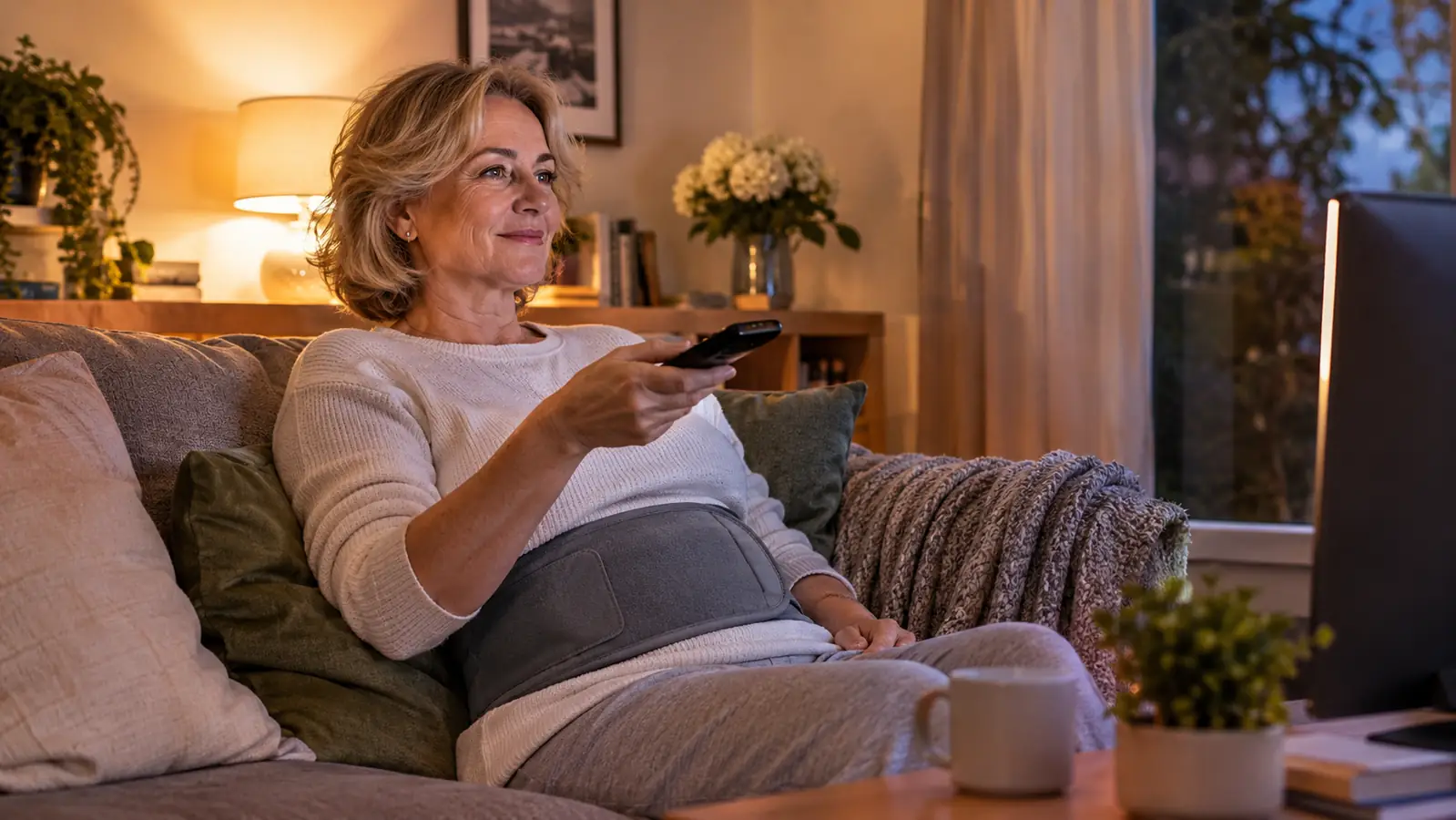
The first time I tried a red light belt, I gave up after nine minutes. It was too loose, then too tight, then bunched up the second I leaned back on the couch. I had read all the instructions, and none of them told me what to do with the extra length or how to keep the pad flat against my lower back. So I want to write the guide I wish I had found back then, using the Lifepro Allevared belt I have been using for the past several months.
The Allevared is a flexible, wraparound pad with 105 triple chip LEDs and three modes: red, near infrared, or both. It runs on 12 volts of direct current, weighs about 14 ounces, and the pad itself is roughly 49 inches long and 7.7 inches wide. That length is exactly why fit matters. Worn carelessly, it slides, wrinkles, and makes you fidget through the whole session. Worn the way I will show you, it stays put well enough that I can forget I am wearing it until the session ends.
Ready to try a comfortable red light session tonight?
The Lifepro Allevared belt is the model I reach for on movie nights. Check today's price on Amazon before you decide.
Amazon Check Today's Price on Amazon →Step 1: Check the fit before you turn it on
Do not turn the belt on until it is positioned exactly where you want it. Once it is glowing, you will be tempted to adjust it by feel, and that is when you end up with a twisted pad or a gap where the LEDs are not touching you at all.
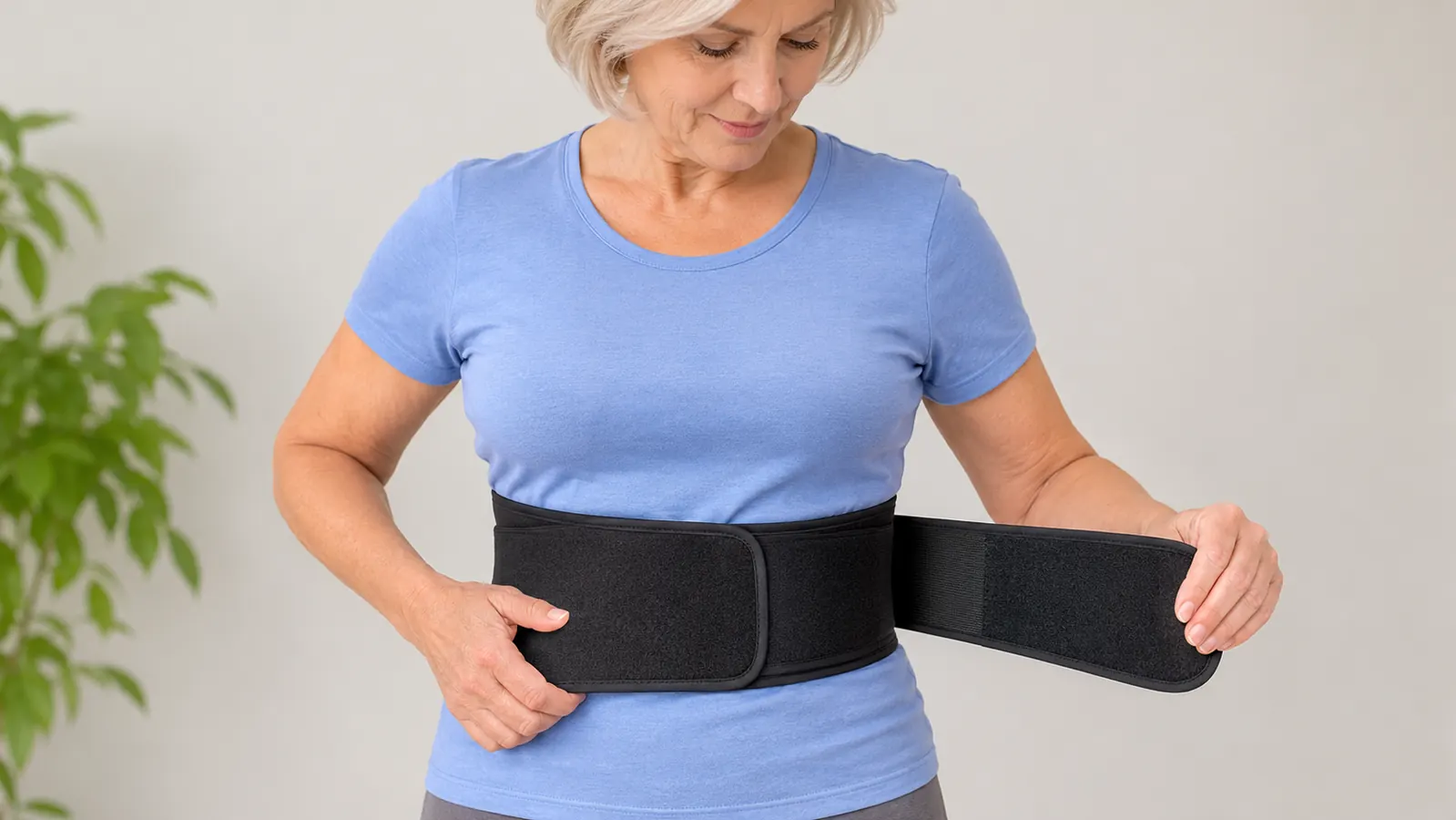
Hold the belt by the two ends, with the LED side facing your body. Wrap it around your midsection or lower back, whichever area you are targeting, and pull both ends so the pad lies flat against your skin or a thin layer of clothing. The Allevared is made of flexible material with a neoprene backing, so it bends easily around your torso. You want it snug enough that it does not slide when you shift, but loose enough that you can take a full breath without the edges digging in. At 49 inches long and 7.7 inches wide, the pad covers a lot of ground, and that is the whole point. It also means there is no single right way to wrap it. On me, the pad wraps around my midsection with a few inches left over, and I tuck the extra length under the edge so it does not flap. On Ray, who is broader through the middle, the same pad wraps with less overlap, and he does not need to tuck anything. The fit is personal.
If you are using it on your lower back like I do, sit down first, then wrap it. Your position on the couch changes the shape of your back, and a belt that feels perfect standing up can gap at the bottom the moment you sit. I learned that the hard way during my first week with it. I had wrapped it standing in front of the mirror in the spare bedroom, checked that both ends were even, and walked to the living room feeling very organized. Ninety seconds after I sat down, I could feel the bottom edge rolling up against the couch cushion. The pad had been lying across the curve of my lower back while I stood, and sitting changed that curve completely. Now I sit first, wrap second, and lean back into the cushions before I even look at the mode switch.
Step 2: Wear it over a thin layer, not bare skin
The instructions might say the pad can be used directly on skin, and it can. But for long sessions, I have found a thin cotton t-shirt or tank top is more comfortable. The neoprene backing is soft, but it can still trap heat against bare skin, and after twenty minutes that warmth goes from pleasant to clammy. I learned this the hard way. The first time I used the Lifepro Allevared, I skipped the shirt and wrapped it directly against my skin, because I assumed that was the point of a therapy belt. For the first ten minutes it felt fine, even pleasant. By minute fifteen, the warmth under the neoprene had turned damp, and by minute twenty I was tugging at the edges and counting down. The next evening I tried it over a thin cotton t-shirt, and the difference was immediate. The session ran the full length, and when it ended I had to check whether the belt was still on, because I had stopped feeling it entirely.
A thin layer also keeps the belt from sticking to your skin when you shift positions. If you are planning to sit through a movie, you will naturally move, reach for a drink, or lean forward. A cotton layer lets the belt move with you instead of grabbing and wrinkling.
One note: do not wear it over a thick sweatshirt or a heavy robe. The padding between the LEDs and your body does not need to be thick to feel comfortable, and the thicker the fabric, the harder it is to tell whether the pad is lying flat. A thin layer is the sweet spot. These days I keep a small stack of old cotton t-shirts in the spare bedroom, the ones that are too soft for anything but lounging, and I reach for one every time. It does not block the light in any way I can notice, and it makes the whole session easier to forget about, which is exactly what I want when I am trying to watch a movie with Ray.
Step 3: Use the three modes to keep the session interesting
The Allevared has three settings: red, near infrared, or both. That is one of the features I appreciate most, because it gives me a reason to pay attention to how the session feels instead of just waiting for it to end.
On a normal evening, I use the combined mode and set the belt on my lower back. The warmth builds slowly and stays even across the whole pad, which tells me the belt is sitting flat. If I feel a hot spot on one side and nothing on the other, that is my cue to adjust the fit before the session goes further. One evening in early October, Ray and I were about halfway through a movie when I noticed a warm stripe running down my left side and nothing at all on my right. I had been sitting in the same position for a while, and the belt had shifted just enough to lift the pad off my right side. I paused the movie, loosened the belt, pulled it flat, and re-tightened it. The warmth evened out within a minute. That moment taught me more about fit than any instruction manual: the belt will tell you when it is sitting wrong, but you have to be paying attention.
The red-only mode feels gentler, and I use it when I want a shorter, lighter session. The near infrared mode feels deeper and warmer. Try all three on your first few sessions so you learn what each one feels like on your body. That way, when you are halfway through a movie and the belt feels different than usual, you will know whether it is the mode or the fit. I also learned to trust the evenness of the warmth as a fit check. When the pad is flat, the heat spreads evenly across the whole surface. When it is bunched, you feel it strongest where the fold is. Now I run my hand over the outside of the belt a minute or two into every session, just to confirm there are no wrinkles underneath. It takes five seconds, and it has saved me more than one session.
Step 4: Position the mode switch so it does not dig in
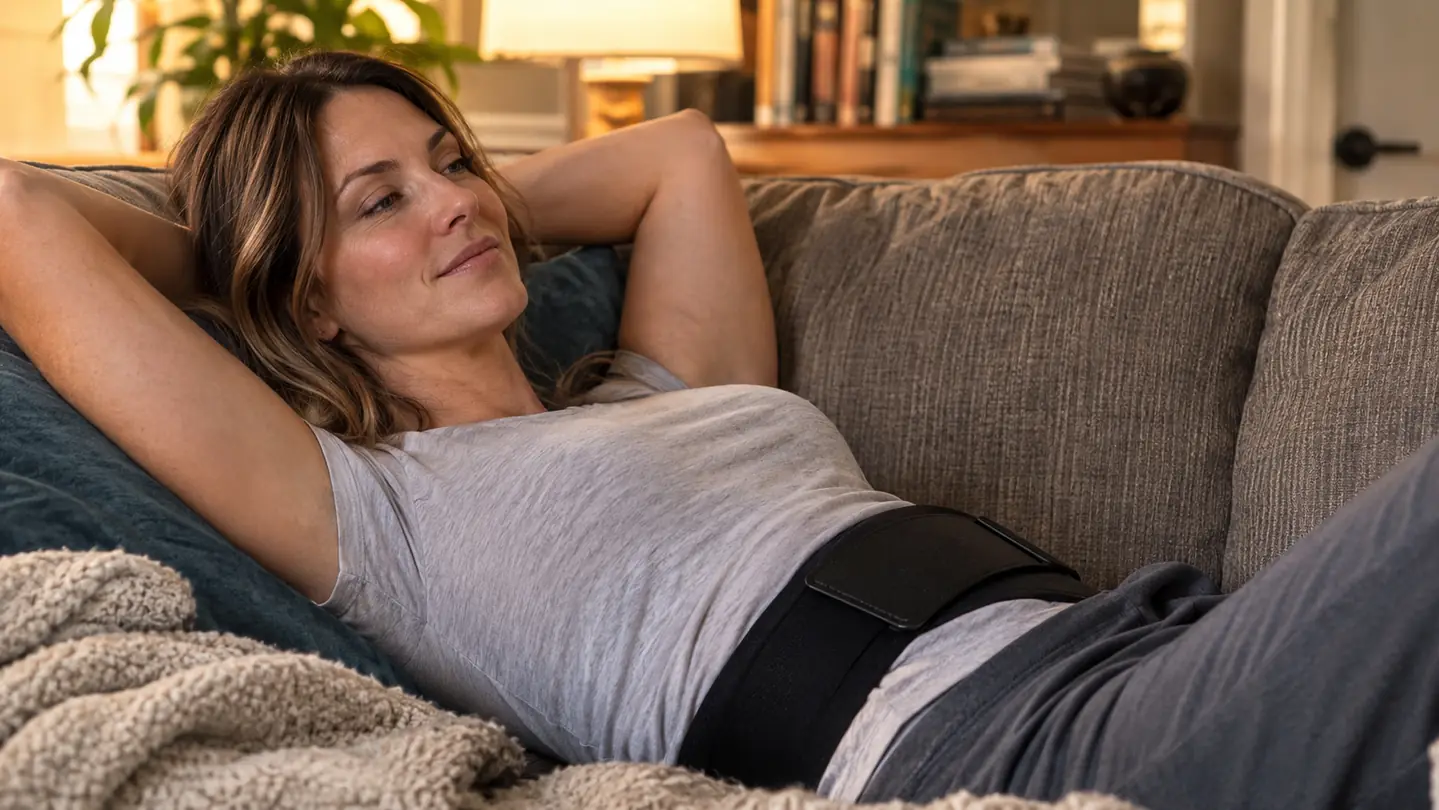
The mode switch sits at one end of the belt, and where that end lands makes a big difference in comfort. If it ends up under your ribs or right on your hip bone, you will feel it for the entire session.
I like to rotate the belt slightly so the switch sits at my side, just above my waist, where my body curves the least. That spot has a little padding and does not press against anything hard. When I use the belt on my lower back, I angle it so the switch rests at my left hip instead of directly over my spine.
This is also the moment to check that the cord is not pinched. The belt runs on 12 volts of direct current, and the cord is flexible, but a folded cord under the neoprene can create a lump you will feel after a few minutes. Smooth it flat before you settle in.
Step 5: Settle in, then do a two-minute check
Once the belt is on and the mode is set, do not just start the session and close your eyes. Give yourself two minutes to move around in your normal sitting position. Lean back, reach for the remote, cross your legs, do whatever you would normally do during a session. The first time I wore the Lifepro Allevared for a full movie, I was nervous about committing to the whole runtime. I set a goal of twenty minutes, told Ray I would probably give up at the first commercial break, and settled in. Twenty minutes came and went. At the thirty minute mark I realized I had not thought about the belt in a while, which is the highest compliment I can give it. When the movie ended, I took it off and noticed my lower back felt warm and relaxed, the way it does after a good stretch.
Then check three things: Is the pad still flat against your back? Is the mode switch still comfortable? Can you breathe easily without the belt shifting? If you answered yes to all three, you are set for the full session. If not, adjust now, before the session starts.
That two-minute check is the difference between a session you finish and a session you abandon. I have abandoned plenty of sessions with other devices. With the Allevared, I have not needed to, because the belt is flexible enough to move with me, and the neoprene backing stays put once it is positioned. These days I set the mode before I settle in, start the session, and let it run while the movie plays. The two-minute check at the start is still the most important habit I have, because it catches the small fit problems before they become the reason I reach for the off button.
What Else Helps
A few small habits make the belt easier to wear comfortably. First, sit on a surface with a little give. A firm dining chair is fine, but a couch or a padded chair lets the belt settle into your body instead of pressing against a hard edge. Second, keep a throw pillow handy. Tucking one behind your lower back while you wear the belt on your midsection keeps your posture relaxed and stops you from hunching forward.
Third, do your first few sessions at home before you wear the belt anywhere else. You need to learn how it feels when you sit, stand, and lie down before you add a movie or a conversation to the mix. Fourth, keep the sessions short at first. The Allevared is comfortable enough for a full session, but your body needs a few tries to get used to the warmth and the pressure of the wrap.
Finally, if you have any health condition or concern, check with your doctor before starting red light therapy. I am not a medical professional, and I do not give medical advice. I can only tell you what I noticed in my own sessions, and what I noticed is that the belt is comfortable enough to wear while I watch a movie with Ray.
The two-minute check is the difference between a session you finish and a session you abandon.
Give yourself the comfortable session you deserve
The Lifepro Allevared belt is the one I reach for on movie nights. Check today's price on Amazon and see if it fits your routine.
Amazon Check Today's Price on Amazon →