
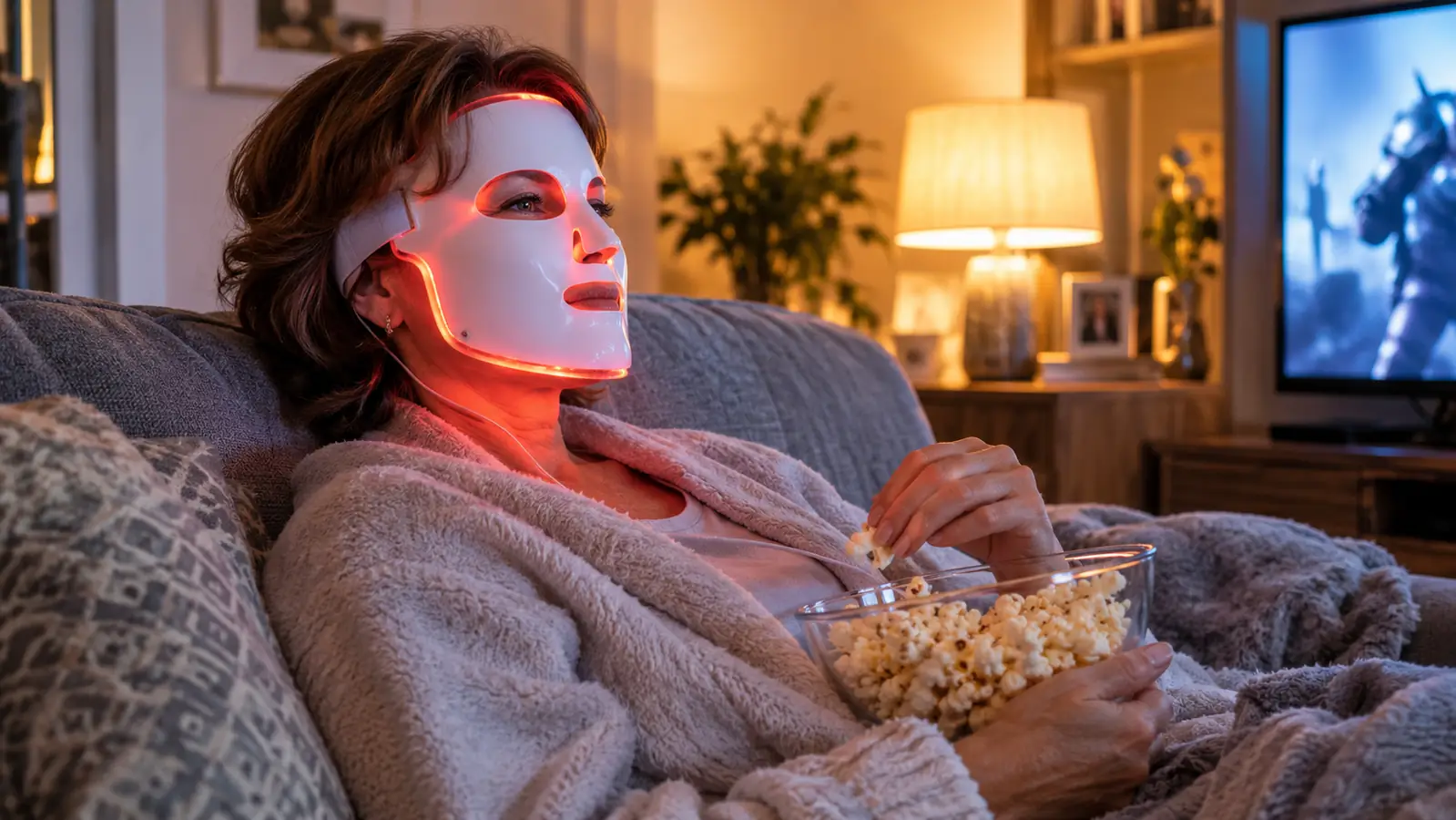
I bought the INIA Red Light Therapy Mask for Face with my own money, after a year of reading about red light therapy and rolling my eyes at most of it. I am Carla Benton, 58, a retired dental hygienist in Savannah, Georgia, and I have spent thirty years standing at a chairside, which means I have strong opinions about things that promise to fix you without a prescription. I started at-home red light therapy about two years ago for my knees, and somewhere along the way I got curious about what the same light might do for my face. So I ordered the INIA mask, used it during movie nights with my husband Ray, and kept notes.
Here is the honest version: the INIA mask is a well-made, reasonably comfortable LED face mask with four modes and 220 LED chips, and it is also the kind of product where the results are slow, the fit takes fiddling, and the instructions assume you already know what you are doing. I think that is worth knowing before you click buy. This review is the conversation I wish someone had with me before I ordered.
The Quick Verdict
A solid, battery-powered LED mask with four modes and dual wavelengths, but the fit is fiddly and the results ask for patience.
Amazon Check Today's Price →See today's price on the INIA mask
If you are still reading, you are probably weighing the same questions I had. The INIA Red Light Therapy Mask is on Amazon right now, and the current price is easy to check in one click.
Amazon Check Today's Price on Amazon →How I've Used It
I used the INIA mask four or five evenings a week for two months, almost always in the living room while Ray and I watched a movie. I would wash my face, dry it, put on the mask, and settle into the couch. It became part of the ritual, like the popcorn, except I was the one wearing the mask. Some nights I forgot I had it on until I tried to say something to Ray and the words came out muffled.
Mostly I used the red and near-infrared modes, because those are the wavelengths I bought the mask for. The listing says 630nm red light is for surface renewal and 850nm near-infrared is for the deeper layers, and I wanted both in one device. I did not use the blue mode much, because I did not buy the mask for acne, but I liked knowing it was there if I ever wanted to change things up.
Ray asked me once if it hurt. It does not. It is just warm and slightly heavy, 1.81 pounds, and after a few minutes you forget it is there, until you try to talk or reach for the remote. The weight is not a problem, but it is present, and I think that is worth knowing before you buy.
The first week was mostly me figuring out the fit. I would put the mask on, look in the mirror, and push it around until the edges felt even. Ray laughed at me once, gently, and said I looked like I was about to pilot something. He was not wrong. By the second week I had a routine: wash face, dry it, put on the mask, settle into the couch, and let it run while the opening credits played. You should also know that the mask changes how you watch a movie. You cannot eat popcorn easily, and your field of vision is narrowed. The first time I wore it, I missed a whole scene because I was too busy adjusting the fit. By the third week I learned to put it on before the movie started and leave it alone.
I will be honest that the first few sessions felt a little strange. There is something odd about sitting in a dark living room with a mask on your face while a movie plays. But by the end of the first week, the strangeness wore off and it just became part of the evening. That is the experience I want to share, because it is the part the listing photos do not show.
What the Specs Sheet Actually Says
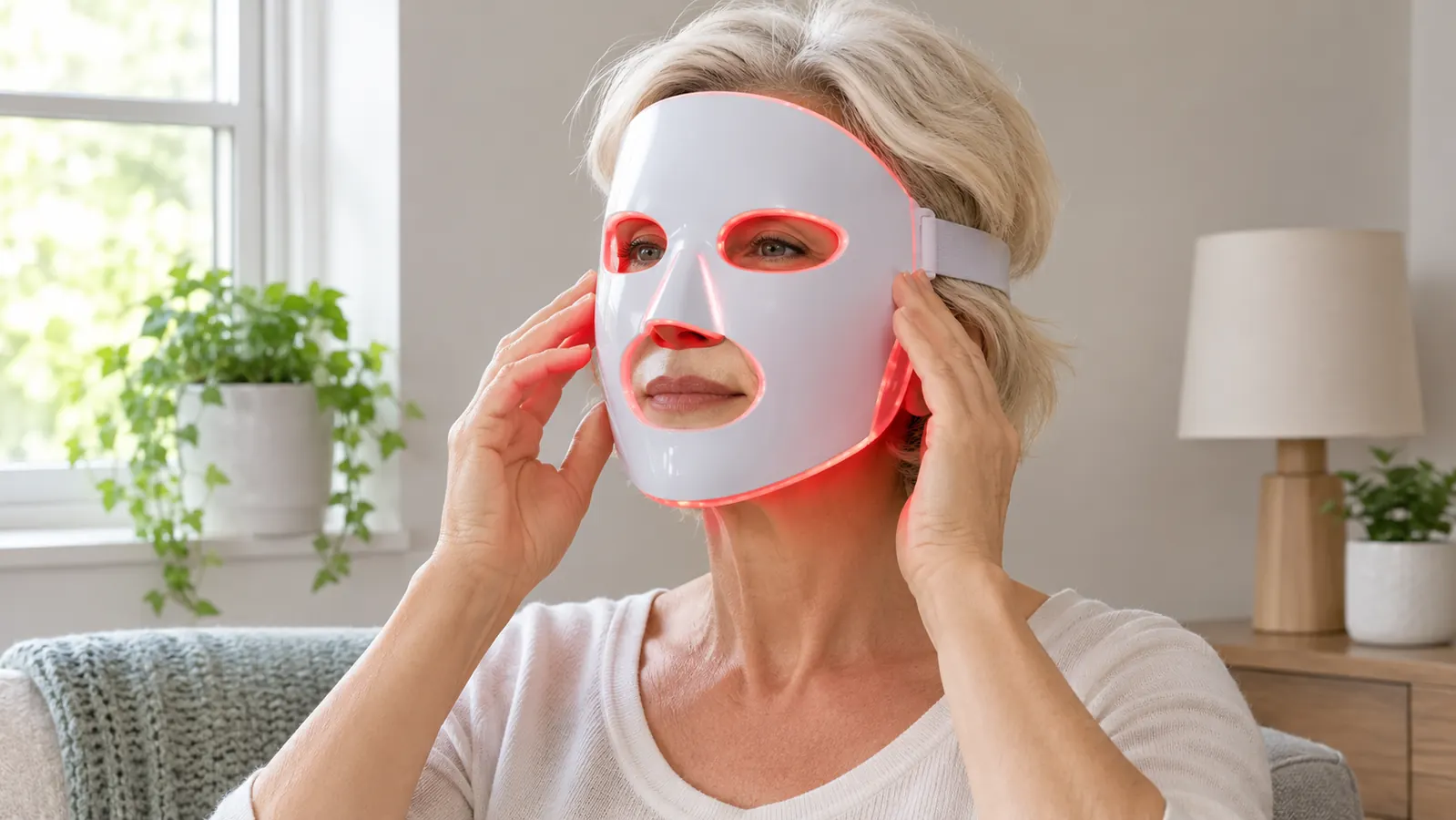
Let me walk you through what the INIA listing actually promises, because a lot of reviews skip the details. The mask uses 220 high-energy LED chips. It has four light modes, which is more than some masks twice the price. It runs on one included lithium ion battery, so there is no cord to wrestle with while you sit on the couch. The package dimensions are 12.68 by 9.09 by 1.93 inches, and it weighs 1.81 pounds. That is the factual story, and it is a good one.
The included battery is a detail I appreciate. Some masks in this range expect you to supply your own, and the included lithium ion battery means you can use the INIA mask without hunting for a cord or an outlet. The package dimensions also tell you it is not a huge thing to store, which matters in our spare bedroom where I keep my red light panel.
The dual wavelengths are the reason I picked the INIA mask over a single-wavelength option. The listing says 630nm red light is for surface renewal, and 850nm near-infrared is for the deeper layers. I cannot verify that in a mirror, but I like knowing the mask is not just one wavelength. It gives me a reason to keep using it, and consistency is the part that actually matters.
I want to pause here and say something about expectations. Red light therapy is not like a face cream you put on and feel working. It is a slow, cumulative thing, and the INIA mask is just the delivery system. If you go into it expecting a change in two weeks, you will be disappointed. If you go into it expecting to build a habit and see what happens over a few months, you will be more satisfied.
What Nobody Tells You Before You Buy
Here is the part I wish someone had said to me. First, the fit is the whole game. An LED mask only works when the chips sit close to your skin, and my face is apparently somewhere between the sizes the designers had in mind. I spent the first week adjusting it, pushing it down, pulling it up, trying to get it to sit evenly. Once I found the right position, it was fine, but it took longer than I expected.
Second, the instructions are thin. The box tells you there are four modes, but it does not really explain what each mode is for or how long to use it. If you are new to red light therapy, you will end up on YouTube or a forum, which is not the worst thing, but it is not the experience you expect from a product at this price. I am comfortable with that, because I have been doing this for two years, but a beginner might not be.
Third, the results are slow, and I mean slow. I have been using the INIA mask for two months, and I can honestly say I have not seen a dramatic change. My skin looks a little calmer on the days I use it regularly, but I cannot tell you it erased anything, and anyone who tells you a mask will erase years of sun damage is overselling. I have read that some people see changes at three or four months, and I believe that, because I have seen nothing dramatic at two.
Cleaning is another thing the instructions do not cover well. I wipe the mask down with a soft cloth after each use, and I am careful not to get water near the battery, because that is common sense with any electronic device. A little routine keeps it feeling fresh, but I had to figure that out on my own. It is not hard, it is just one more thing nobody mentions in the listing.
The Good
Let me give the INIA mask its due. The 220 LED chips cover my whole face at once, which is the main reason I picked it over a smaller wand. The four modes give me room to change things up, and the battery means I can use it anywhere in the house. At 1.81 pounds, it is light enough to wear during a movie, and the shape of the mask follows the curve of my face well enough that I do not feel like I am wearing a science project.
I also like that it is a dedicated face mask, not a whole-body panel. I have a panel for my knees, and I do not want to lie on the floor with a giant light every night. The INIA mask fits into my routine because it is small, quiet, and easy to reach for. It lives on the shelf in the spare bedroom, and when I want it, it is right there.
The four modes are genuinely useful. I like that I can switch between red and near-infrared, and the blue mode is there if I ever want it. Having choices makes the mask feel less like a one-trick gadget and more like a tool I can adapt as my skin changes with the seasons. That flexibility is what keeps me reaching for it.
The 1.81 pounds is worth calling out because it is lighter than I expected. I have worn heavier masks that left red marks on my cheeks. The INIA mask did not do that, and I think the weight is part of the reason it is comfortable enough to wear for a full movie. It is not weightless, but it is easy to ignore once the movie gets going.
I have also thought about whether I would buy it again. The answer is yes, with one condition: I would want to know about the fit before I ordered. The fit is not a dealbreaker, but it is the difference between a device that feels effortless and one that feels like a project. Once I got past that, the INIA mask became a normal part of my evening.
The Not So Good
Now the part that keeps it from five stars. The fit is the first thing. If the mask does not sit flush against your skin, the chips are not doing their job, and getting it flush took me a week of fiddling. The instructions did not help, because they did not show me how to adjust it for my face. I eventually figured it out, but I should not have had to.
Second, there is no real feedback. The mask has four modes, but I found myself guessing whether I had the right mode, because the instructions did not explain the order. That is not a great feeling when you are trying to be consistent. I ended up writing a note on my phone about which mode I used last, which is not something I should have to do.
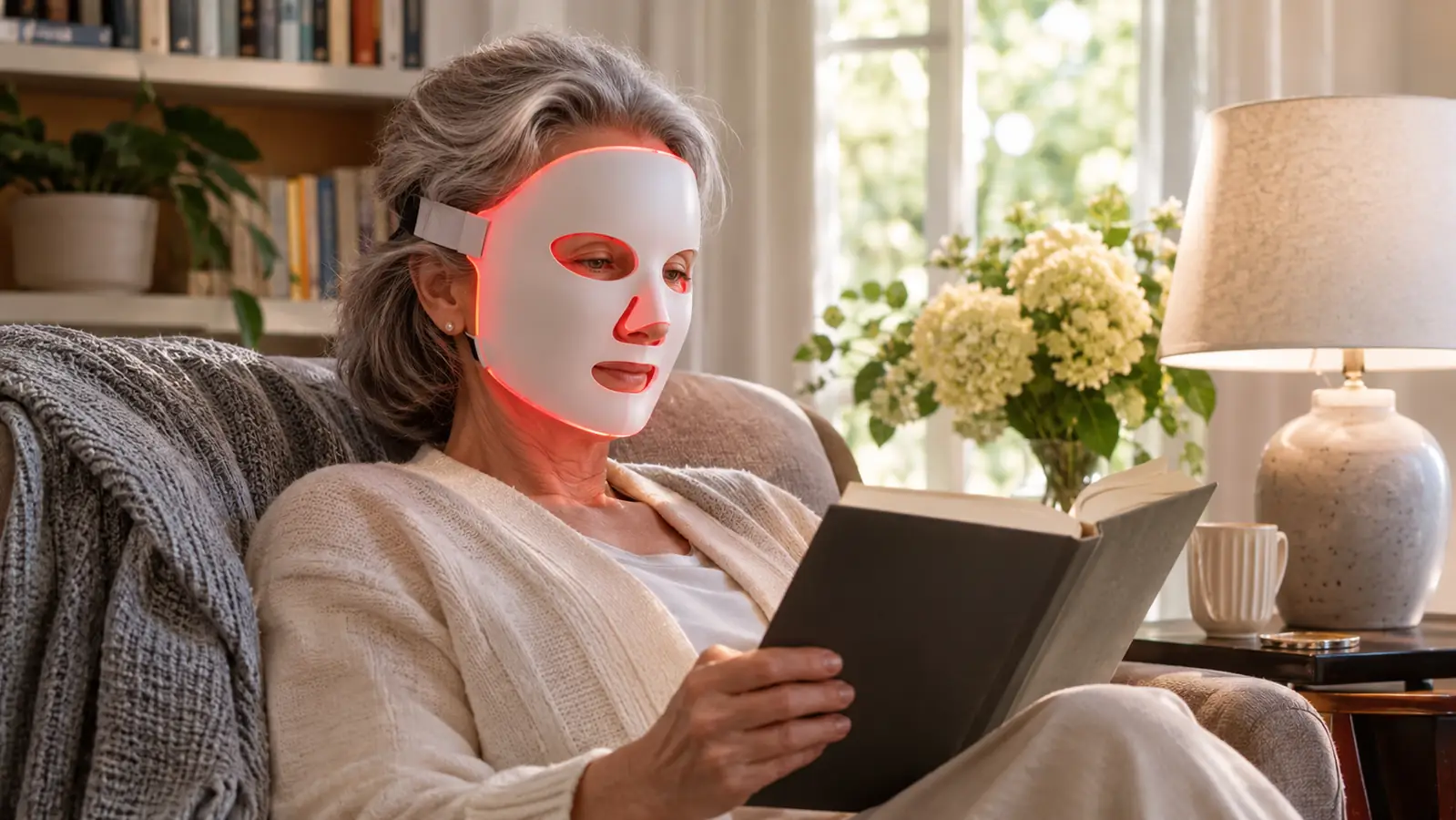
Third, it is not a quick fix, and I say that with love. If you are looking for a mask that will fix your skin while you sleep, this is not it. It is a tool, and it only works if you use it consistently, and even then the results are subtle. I would rather tell you that now than have you find out after sixty days. The other limitation is that you cannot wear it while doing much else. It is fine for sitting still and watching a movie, but you will not be folding laundry or reading a book comfortably, at least not with the version I have.
Before you start any light therapy, especially if you have a history of skin cancer or you take medications that make your skin sensitive, check with your doctor. I am not a doctor, and I do not give medical advice. I can only tell you what I noticed, and what I noticed is that the INIA mask is a pleasant addition to a routine, not a substitute for one.
So where does that leave me? The INIA mask is a good tool for someone who wants a simple, battery-powered LED mask with four modes and dual wavelengths, and who is willing to be patient. It is not a dramatic device, and it will not replace a skincare routine or a doctor's advice. But as a way to spend twenty minutes on the couch during a movie, it has earned a place in my routine. I will keep using it, and I will keep being honest about what it does and does not do.
One more thing I want to say plainly: I am not a medical professional. I am a retired dental hygienist who has spent two years using red light therapy at home, and I can tell you what I observed, not what a doctor would tell you. If you have any health concerns, please check with your doctor before you start. That is not a disclaimer I put in to be safe; it is the same thing I would tell a friend.
What I Liked
- Four light modes give you room to customize
- 220 LED chips cover the whole face at once
- Dual wavelengths, 630nm red and 850nm near-infrared, in one mask
- Battery included, so no cord to manage
- Lightweight at 1.81 pounds, easy to wear on the couch
Where It Falls Short
- Fit takes fiddling to get the chips close to your skin
- Instructions are thin and assume prior knowledge
- Results are slow and subtle, not dramatic
- Blue mode is not useful for everyone
After two months of using the INIA mask during movie nights, the biggest change I can honestly report is that I actually kept using it.
Who This Is For
The INIA mask is for someone who already has a skincare routine and wants to add red light therapy without a big learning curve. It is for people who like the idea of a battery-powered mask they can wear on the couch during a movie, and who understand that results come from consistency, not from a single session. If that sounds like you, this is a reasonable place to start, and the four modes mean you are not locked into one routine.
If you are new to red light therapy, I would tell you to start with a mask like this rather than a full panel. It is small, it is simple, and it gives you a chance to build the habit before you invest in something larger. You can always move up later, but starting with a face mask is an easier way to see if the routine sticks.
It is also a good choice if you travel. The battery means you can pack it without a cord, and the size is small enough to fit in a weekender bag. I have not taken it on a trip yet, but I can see how it would be easy to bring along.
Who Should Skip It
Skip the INIA mask if you want fast results, if you hate fiddling with fit, or if you expect a device to do the work while you do nothing. If you need an app or a timer, check the current listing to confirm what the INIA mask includes, because the version I have is a straightforward device and I did not test those features. And if you are looking for a medical treatment, talk to your doctor instead of ordering a mask online.
If you already own a red light panel and you are happy with it, you do not need this mask. It is an addition, not a replacement, and I would not want anyone to buy it thinking it will do what a full-body panel does. It targets the face, and that is all it does. For some people that is exactly what they want, and for others it is not enough.
If you are the kind of person who already owns three devices that promised to change your skin and they are all in a drawer somewhere, skip this one. It will not be different unless you are ready to use it consistently. The mask cannot make you consistent; that part is on you.
Ready to give it a try?
The INIA Red Light Therapy Mask is on Amazon right now. Check today's price, read the current reviews, and decide if it fits your routine.
Amazon Check Today's Price on Amazon →