
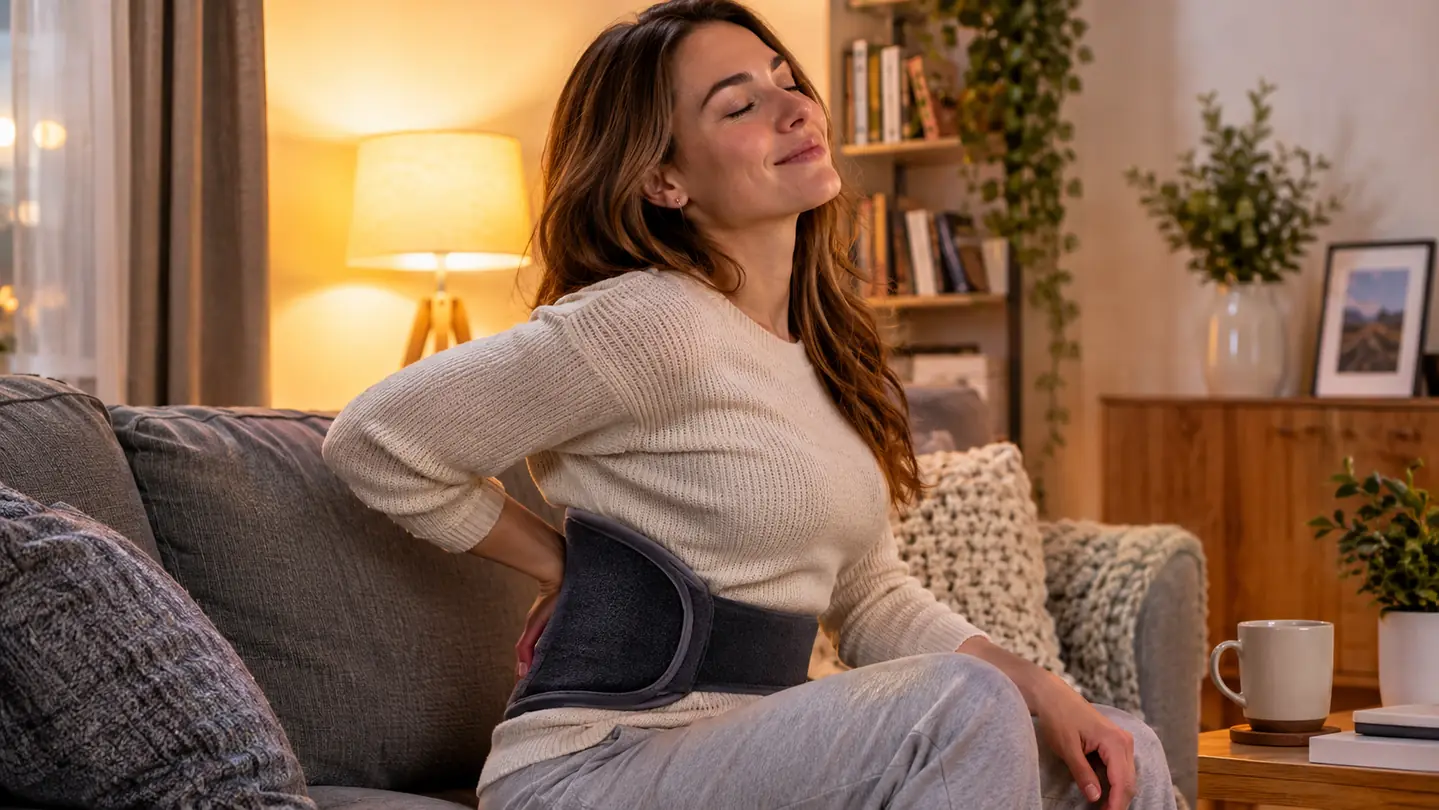
I will start with the part that surprised me most about the bonodave red light pad: it is not a glamorous device. It is a corded fabric pad with an elastic strap, the kind of thing you wrap around a knee while you watch television. There is no app, no screen, no timer dial to fiddle with. You plug it in, wrap it on, and let it run. After six weeks of using it on my knees and lower back, I have a clear picture of what it does well and where I would tell a friend to pump the brakes. This is that review, good and not so good.
The Quick Verdict
A simple, corded pad that does the basics well, as long as you know what you are getting: no app, no timers beyond the auto shutoff, and a strap that takes a little practice.
Amazon Check Today's Price →Want the short version before I go on?
The bonodave pad is a straightforward red light pad for someone who wants to try red light therapy at home without a big investment. It is not fancy, and that is part of its appeal. Check today's price on Amazon to see if it fits your budget.
Amazon Check Today's Price on Amazon →How I Used It
I am Carla Benton. I am 58, retired from 30 years as a dental hygienist, and I live in Savannah with my husband Ray. My interest in red light therapy started about two years ago when my knees and lower back started complaining after a lifetime of standing at a chairside. I have tried a few devices since then, and I have learned to be skeptical of the hype. So when I ordered the bonodave pad, I decided to keep a simple notebook: what I did, when I did it, and what I noticed.
For six weeks, I used the pad five or six evenings a week, usually while Ray and I watched a movie. The routine was simple: I wrapped the pad around one knee, secured it with the elastic strap, set it to the 10 hertz pulse mode, and let it run for about 15 minutes. Then I switched knees. On weekends I would wrap it around my lower back for a session on the couch. I wrote down the date of every session, and I counted 34 sessions total between the first Tuesday in June and mid-July.
The first session, on the evening of Tuesday June 4, was a small disaster. I wrapped the pad too tight around my left knee, the elastic strap bunched up behind the joint, and I spent the first five minutes fussing with it instead of relaxing. I had also misjudged the cord, so I was sitting at an awkward angle stretched toward the outlet. By the time I got comfortable, the session was half over. The next evening I loosened the strap, moved the couch six inches closer to the outlet, and the whole experience changed. That is the kind of detail I wish a product page would show you, and it is exactly why I kept the notebook.
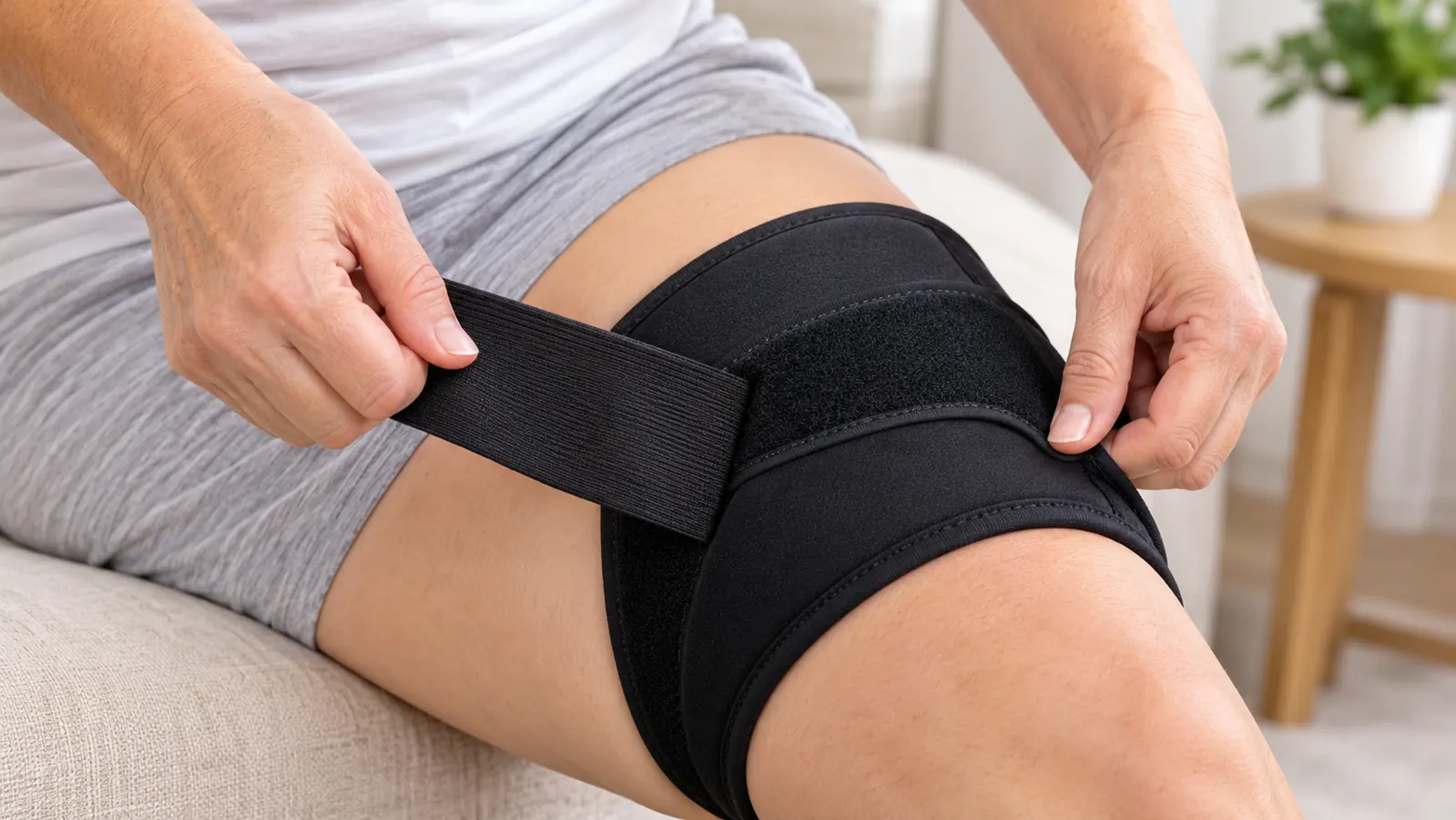
The pad is corded, which means you are tethered to an outlet. That was fine for me because I was sitting still anyway, but it is worth knowing before you buy. The fabric is soft and flexible, and it wraps easily around a knee or shoulder. The elastic strap holds it in place well enough that I could lean forward to grab the remote without it sliding off. The whole thing weighs about 1.23 pounds according to the package dimensions, and it feels lighter than that once it is strapped on, which surprised me the first time I wore it standing up to get a glass of water.
What I Liked About the bonodave Pad
The first thing I noticed was the warmth. The pad gets gently warm when it is on, and that warmth is genuinely pleasant on a stiff knee. The listing describes it as a comforting warmth, and I would agree. It is not hot, just noticeable, like a mild heating pad. The first time I used it, on a Tuesday evening after a long day of gardening, I actually fell asleep on the couch with it still running, which tells you how comfortable it felt. That alone made me look forward to my evening sessions.
I timed the warm-up one evening out of curiosity. From a cold start on the floor beside the couch, the pad felt noticeably warm through my sweatpants after about four minutes, and it settled into a steady, even heat by the sixth minute. It never climbed past that point, which is what I liked most. A heating pad that keeps getting hotter makes me nervous, but this one found its level and stayed there for the whole session. The listing says the pad carries 105 lamp beads, each with three chips, one 660nm red and two 850nm NIR. I cannot verify the science behind that, but I can tell you the warmth spread evenly across the whole pad, with no hot spots that I could feel, which is more than I can say for an older heating pad I own.
The second thing I liked was the pulse mode. The specs list a 10 hertz pulse mode, and I could feel the gentle pulsing sensation during use. It is subtle, but it gives the session a rhythm that I found relaxing. I cannot tell you what the 10 hertz frequency does physiologically, because I am not a doctor and I do not make medical claims. What I can tell you is that it felt pleasant and helped me sit still for the full session. On nights when I was restless, the pulse gave me something to focus on, like a slow metronome, and I found myself breathing with it without meaning to.
The third thing I appreciated was the simplicity. There is no app to pair, no Wi-Fi to connect, no menu to navigate. You plug it in, choose the mode, and use it. For someone like me who just wants to sit on the couch and let the device do its thing, that simplicity is a feature, not a drawback. I have a friend who bought a fancier panel with a companion app, and she spent her first two evenings just trying to get the Bluetooth to connect. I did not have that problem, and I was grateful for it.
The honest truth is that the bonodave pad is not going to change your life in a week. What it did for me was make a daily routine that felt good and was easy to stick with.
What Nobody Tells You Before You Buy
Here is the part I wish someone had told me before I ordered. The bonodave pad is a corded device, and the cord is not long enough to reach across a room. You need to sit near an outlet, or use an extension cord. I keep an extension cord behind the couch, and that solved it. But if you are imagining using this pad while moving around the house, adjust that expectation now. I learned this the hard way on my second evening with it, when I tried to use it on the porch and had to drag a chair within three feet of the outlet. The cord on mine reaches from the outlet behind the couch to about the middle of the cushion, which sounds fine until you realize you cannot shift positions without pulling it taut. I learned to set everything I needed, the remote, my book, a glass of water, within reach before I started a session, because once the pad was strapped on, getting up meant unstrapping it.
The second thing nobody tells you is that the strap takes practice. The elastic strap that holds the pad in place works fine once you figure it out, but the first few times I used it, I felt like I was wrestling with it. The pad would bunch up, or the strap would slip, and I would have to redo it. On the third evening, I tried wrapping it around my shoulder while standing, and it slid down twice before I gave up and sat down. After a week I got the hang of it, but it is not a set-it-and-forget-it experience on day one.
The shoulder attempt I mentioned is the one I remember best. On that third evening I draped the pad across my left shoulder and reached behind my back to pull the strap across my chest, and the whole thing slid down onto my upper arm before I could secure it. I tried again with the strap coming from the other direction, and it slipped a second time. What finally worked was sitting down, wrapping the pad around the shoulder from the front, and holding one end of the strap with my free hand while I brought the other end around. Even now, after six weeks, I would not trust it on a shoulder while walking around the house. On a knee or a lower back it can rest against something solid, so it stays put. On a shoulder it needs a steady position and a little patience, and that is simply the nature of a flexible pad.
The third thing is the auto shutoff. The specs list automatic shutoff as a feature, and it is a good safety feature. But it also means your session ends when the device decides, not when you decide. I learned to plan for about 15 minutes per session, and when the pad shut off, I would unplug it and move to the next area. One night I fell asleep with it on my knee, and the auto shutoff is the reason I did not wake up to a hot pad hours later. That is a real safety win. But if you like to control exactly how long your session runs, that is something to consider.
How It Performed Over Six Weeks
I want to be careful here because I do not want to overpromise. I am not going to tell you that the bonodave pad cured my knee pain or erased years of sun damage. What I can tell you is what I noticed over six weeks of consistent use.
My knees felt less stiff in the mornings. That is the most honest way I can put it. I cannot prove the pad caused it, because I was also stretching more and paying more attention to how I moved. But the mornings when I had used the pad the night before were noticeably better than the mornings after I skipped a few days. I kept that pattern in my notebook, and it held up. On the mornings after I skipped, I would notice the stiffness creeping back around the time I reached for my coffee cup.
The clearest example came in the third week. On a Monday night I used the pad on both knees for the usual 15 minutes each, and on Tuesday morning I walked down the stairs without holding the railing, which I had been doing every morning since spring. Two nights later I skipped my session because we had friends over, and Thursday morning I was back to reaching for the railing. That pattern repeated itself often enough that Ray started to notice. He would watch me come down the stairs and ask whether I had done my light therapy the night before, and he was right more often than not. I am not a doctor, and I am not telling you this will happen for you. I am telling you what my notebook showed over six weeks, nothing more.
The warmth and the routine were the biggest wins. There is something about sitting still for 15 minutes with a warm pad on a sore knee that makes you slow down. Ray even started asking if I was going to do my light therapy before we picked a movie, because he knew I would be settled and calm for the whole session. By the fourth week, the routine had become the best part of my evening, and I looked forward to it the way other people look forward to a cup of tea.
One thing I did not notice was any dramatic change in my skin. I have sun-worn skin from years of Georgia summers, and I had hoped the 850nm NIR light might help with that. After six weeks, I cannot say I saw a visible difference. I checked in the mirror every Sunday, and I even took a photo of my forearm in the same window light at the same time of day. I also asked Ray to look at the two photos side by side without telling him which was which, and he picked the wrong one, which I took as a fair sign that any difference was not obvious to a neutral eye. Comparing the first photo to the last one, I could not point to a change. That does not mean the light is not doing something. It means I did not see a change, and I think that is worth knowing before you buy.

Pros and Cons
What I Liked
- Simple corded design with no app, Wi-Fi, or menu to learn
- Genuinely pleasant warmth that made me look forward to sessions
- 10 hertz pulse mode gave the sessions a relaxing rhythm
- Lightweight at about 1.23 pounds, easy to wear while sitting
- Elastic strap held the pad in place once I practiced a few times
- Auto shutoff is a real safety feature, especially if you fall asleep
Where It Falls Short
- Cord is short; you need to sit near an outlet or use an extension cord
- Strap takes practice and can bunch up on the first few tries
- Auto shutoff means the session ends when the device decides
- No timer dial or controls beyond the mode, so you cannot set your own session length
- I saw no visible change in my skin after six weeks
Who This Is For
I think the bonodave pad is a good fit for someone who wants to try red light therapy at home without spending a fortune or learning a complicated system. If you are the kind of person who likes to sit still for 15 minutes, does not mind a cord, and wants a simple device you can wrap around a knee or shoulder, this pad is worth a look. It is also a good fit for someone who already knows they like red light therapy and wants a second device for a specific body part. The pad design makes it easy to target a knee or an elbow, which is harder to do with a large panel. If you already have a panel for your whole body and want something smaller for a stubborn joint, the bonodave pad could be that something.
Who Should Skip It
If you want a device you can use while moving around the house, skip the bonodave pad. The cord makes that frustrating. If you want app controls, timers, and data tracking, skip it. This pad does not have any of that, and you will be disappointed. If you are looking for a quick fix or a dramatic transformation, skip it. I have been using red light therapy for two years, and I can tell you it is a slow, steady practice with no overnight results. The bonodave pad is a tool, not a cure. If you go in expecting it to erase pain or change your skin in a month, you will be let down. Go in with realistic expectations, and you might be pleasantly surprised.
Ready to see if the bonodave pad is your kind of simple?
If a corded, no-frills pad for knees, back, and shoulders sounds like your kind of thing, check today's price on Amazon. If it does not, that is okay too. The right device is the one you will actually use.
Amazon Check Today's Price on Amazon →